Vortek VRAM Series
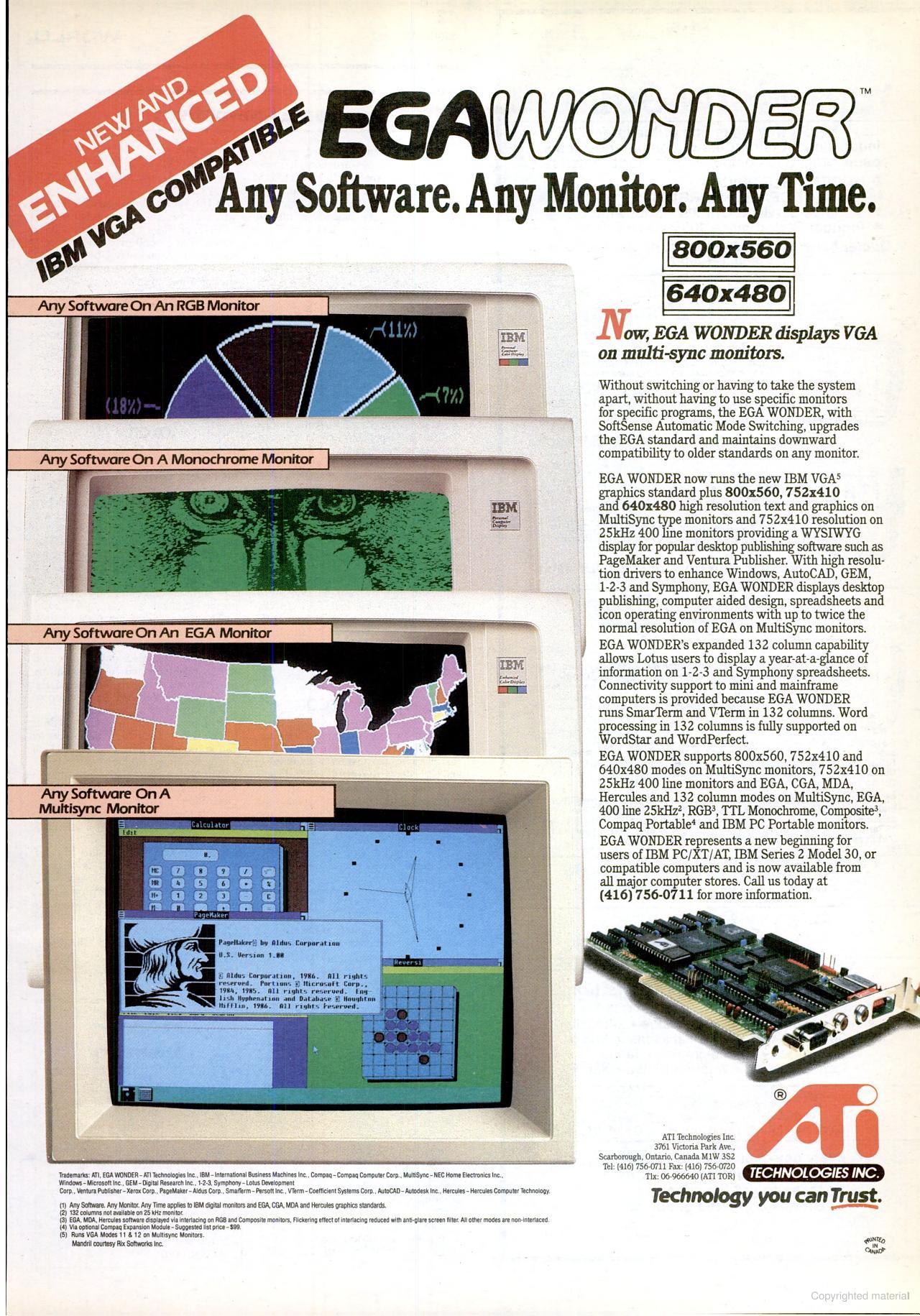
The Boca Research Vortek VRAM series was Boca Research's premium graphics card in late 1993, leveraging the powerful IIT AGX-01x chipset.
|
Released | Late 1993 |
| Bus | ISA and VESA Local Bus | |
| Chipset | IIT AGX-014 (ISA) or IIT AGX-015 (VLB) | |
| Standards | VGA | |
| Memory | 2 MB VRAM (60ns) | |
| Ports | 15-pin DSUB (analog video) | |
| RAMDAC | Sierra Semiconductor 15025 (110 MHz) | |
| Part # | - | |
| FCC ID | EUD 5U9 BRI4940 | |
| Price | Dec 1993: $595 (ISA) or $625 (VLB) | |
| See Also |

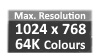
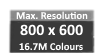
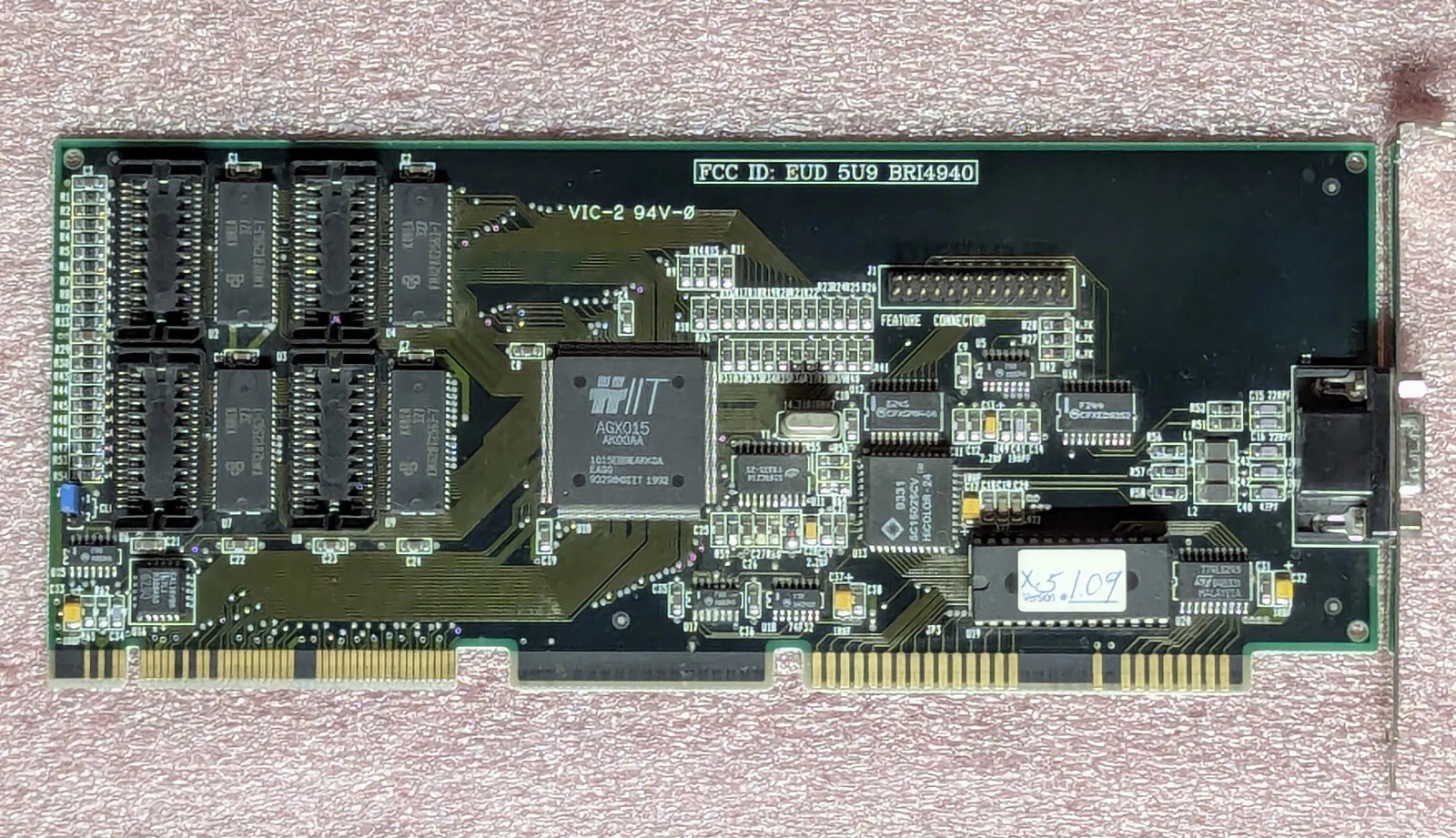
The Vortek VL-VRAM Accelerator was the faster of the two in the series, sitting on the VESA Local Bus, while an ISA 16-bit variant called Vortek VRAM Accelerator was slightly slower due to the bus limitations. Both cards supported screen resolutions up to 1280 x 1024 in 256 colours, 1024 x 768 in 65,536 colours, and 800 x 600 in 16.7 million (24-bit) colour. They were fitted with an external Sierra Semiconductor 15025 RAMDAC that ran at 110 MHz.
Based on a RISC engine, the IIT chipsets support the IBM XGA standard (running four operations per instruction) and were backward-compatible with VGA, EGA, CGA, and Hercules standards. IIT claimed that each chip could accommodate up to 6 MB of VRAM, however the AGX-014 required glue logic to support it. Here's a summary of the two AGX chipsets:
| AGX-014 | AGX-015 | |
|---|---|---|
| Bus Support | ISA only | ISA and VESA Local Bus |
| Maximum Memory | 6 MB | 6 MB |
| Highest Resolution / Colour Depth | 1280 x 1024 / 16.7M colours | 1600 x 1200 / 16.7M colours |
| Memory Clock | 55 MHz | 65 MHz |
| Accelerated GUI Functions | No | Yes |
Board Revisions
I have no information on the various board revisions on the Vortek VRAM series.
Competition
In late 1993, 2 MB graphics accelerator cards were aplenty, though these were very much mixed in terms of their performance since many cards were still using the old ISA bus while others worked on the faster VLB bus. The Vortek series went head to head [alongside its sibling, the SuperX VGA] with cards such as Diamond Stealth Pro VLB, Orchid Fahrenheit VA/VLB, Genoa Windows VGA 24 Turbo, ELSA Winner 1000VL, Number Nine GXE, Hercules Graphite Pro, and Matrox MGA Ultima. A lot of these 2 MB cards supported resolutions of 1280 x 1024 in 256 colours.
In a PC Magazine review in December 1993, the fastest 2 MB cards that ran at 1024 x 768 in 256 colours were the Appian Renegade 1280/V, American Megatrends FastView VLB, Cardinal WarpSpeed, Diamond Viper VLB, and Matrox MGA Ultima VLB. The Boca Vortek cards sat in the middle of the pack (though were faster than the Boca SuperX VGA) alongside the Diamond Stealth Pro VLB, ELSA Winner 1000, Genoa WindowsVGA 24 Turbo, and Orchid Fahrenheit VA/VLB. Moving to 800 x 600 in 16.7 million colours, the Matrox MGA Ultima VLB really shone, though strikingly, the ISA version of the same card came in 2nd place, followed in 3rd by the Actix GraphicsEngine Ultra VL.
Drivers played a massive part in a card's performance during this time, with card manufacturers often drastically updating the chipset maker's reference drivers, so if your card seems to be operating well below par, try searching for different drivers. Key chipset manufacturers for these cards include the Weitek P9000, Appian AGC 98032, Matrox MGA, ATI mach32, S3 86C801, S3 86C805, S3 86C928, and Tseng Labs ET4000/W32i.
In the Media
The prices of these ten boards varied widely. The cards based on the AGX-014 were the $349 VidTech GraphMax, $349 Western Digital Paradise Accelerator Pro, $499 Volante Warp20-2, and $595 Boca Research Vortek VRAM Accelerator. Those based on the AGX-015 included the $299 Black Widow VLB (from SPiDER Graphics), $399 VidTech GraphMax VL, $429 Orchid Celcius/VLB, $549 Hercules Graphite Pro and Hercules Graphite VL Pro, and $625 Boca Research Vortek VL-VRAM Accelerator.
In general, the cards based on the AGX-015 were faster than those based on the AGX-014. They are all VL-Bus cards, except for the ISA-based Hercules Graphite Pro.
Both versions of the Hercules card were the standouts among the adapters based on the IIT chip. Both had good WinBench and Winstone results, decent AutoCAD scores, and excellent software. The ISA version's performance was almost on a par with its VL-Bus counterpart. At $549 it is not cheap, but if you have an ISA-bus machine and want 24-bit capabilities, the Graphite Pro is a good buy.
AGX-014-Based Boards
On our WinBench tests, the cards using the AGX-014 chip generally were near the bottom of the pack in terms of performance and had mediocre video scores. Most of their Winstone results were below average as well. Among the ISA-only cards in our review, the ISA-bus cards using the AGX-014 produced average results.
An advantage of the AGX-014 ISA cards was their support for 24-bit color in 800-by-600 resolution, which most other ISA cards and many VL-Bus cards in this roundup did not support.
On our AutoCAD test, the Boca Research and Western Digital boards were average, (21st and 18th respectively) among all boards tested. But the Paradise Accelerator Pro ranked third and the Vortek VRAM Accelerator fifth among the 13 ISA cards we reviewed, with well above average scores. This was the only bright spot in the AGX-014 group's AutoCAD performance. The VidTech GraphMax VLB's results were below average, and the Warp20-2 could not run the test. AutoCAD performance is an indication of how well the cards and software run a protected-mode intense graphical load. It also provides insight into how well a vendor has implemented application-specific device drivers.
AGX-015-Based Boards
The VL-Bus cards with AGX-015 chips generally earned above-average Graphics WinMark scores in 800-by-600 mode with 256 colors. The Graphite VL Pro was the top performer, garnering a score of 11 million pixels per second using 8MB of RAM and 10.9 million pixels per second using 16MB of RAM - thirdteenth place rankings. The AGX-015 boards also posted good Graphics WinMark results in 1,024-by-768 mode with 256 colors. And on these tests, the Black Widow was the second-fastest card that uses an AGX-015. The Graphite Pro turned in average scores, compared with those of the entire 43-adapter test group, but its performance was above average among the ISA-only cards. The Winstone results for the VL-Bus group based on the AGX-015 were all slightly above average.
For PC Bench 8.0, all the cards based on the AGX-015 scored below average. The Graphite Pro scored below the ISA card average as well. Based on these results, these cards are not the strongest performers for DOS-based applications.
In 800-by-600 mode with 16.7 million colors, the Graphite VL Pro's Graphics WinMark score of 2.3 million was the best of the IIT AGX-015 group, and was average for the overall test group's 24-bit average. The Graphite Pro scored 1.8 million, which was just above the 1.6 million average for ISA cards and second only to the ISA-version Matrox MGA Ultima, which scores 5.9 million.
On the AutoCAD test, the Vortek VL-VRAM Accelerator and the Orchid Celcius/VLB were the only cards using the AGX-015 to score above the average for the 43 cards. The Vortek VL-VRAM Accelerator ranked sixth, followed by the twelfth-place Celcius/VLB. The rest of the cards based on the AGX-015 scored below average. The Graphite Pro placed below the average among the other ISA cards.
"
PC Magazine, 7 Dec 1993
Setting it Up
I have no information of the hardware set up for the Boca card.
Downloads
Operation Manual Get in touch if you can provide this missing item! |
Original Utility Disk Get in touch if you can provide this missing item! |
|