SR9
Number Nine's SR9 series of graphics cards were first announced on 28th April 1999 with shipments expected the following month. The SR9 series was based on the S3 Savage4 chipset, and came with either 8 MB, 16 MB or 32 MB of SDRAM or SGRAM video memory.
|
Released | May 1999 |
| Bus | AGP 2x/4x or PCI | |
| Chipset | S3 Savage4 (86C395) | |
| Standards | MDA, Hercules, CGA, EGA, VGA | |
| Memory | 8 MB, 16 MB or 32 MB SDRAM or SGRAM | |
| Ports | 9-pin DSUB (RGB analogue video out) | |
| Part # | 01-338120-00 (board rev.00, SVGA analog output), 01-338120-002 (board rev.02, SVGA analog output), 01-338340-00 (DVI output) | |
| FCC ID | ||
| RAMDAC | (embedded in S3 chip) | |
| Price | SR9 Pro 16 MB AGP: $109 at launch SR9 Pro 32 MB AGP or PCI: $149 at launch |
|
| See Also |


 Some SR9 cards came with a traditional 15-pin DSUB for SVGA video output; others got a DVI connector and an analog to digital converter chip near to it by Silicon Image - the latter required an upgrade module called the DFP Module.
The SR9 was the computer industry's first ever DVI (Digital Video Interface) graphics accelerator card. Number Nine showed a DVI-compliant SR9 under the auspices of the Digital Display Working Group (DDWG), a group headed by Intel, Compaq, Fujitsu, Hewlett Packard, IBM, NEC and Silicon Image. The DDWG was chartered with establishing the DVI specification, a single display interface standard that supports both conventional glass-tube monitors which use analog video signals, and the new breed of flat-panels displays that are fed a digitally pure video signal. The DVI specification also provides a clear roadmap to future high performance, high-resolution digital displays. The DDWG announced the DVI 1.0 specification in early April 1999.
It supported screen resolutions up to 1600 x 1200 in True Color (32-bit), up to 1920 x 1080 in Hi-Color (16-bit), and for flat panels up to 1280 x 1024 in 24-bit True Color.
There were three models in the SR9 series:
- SR9 LT - 86C394 (Savage4 LT) with 8 MB of SDRAM and 15-pin. 110 MHz core/memory and 300 MHz RAMDAC. DSUB port. Released slightly later in 1999.
- SR9 Pro - 86C397 (Savage4 Pro) with 16 MB or 32 MB of SDRAM. 125 MHz core clock, 143 MHz memory clock, 300 MHz RAMDAC. Released in May 1999.
- SR9 Xtreme - 86C398 (Savage4 Xtreme) with 8 or 16 MB of SGRAM. 166 MHz core clock, 166 MHz memory clock, 300 MHz RAMDAC. DVI port. Released in May 1999.
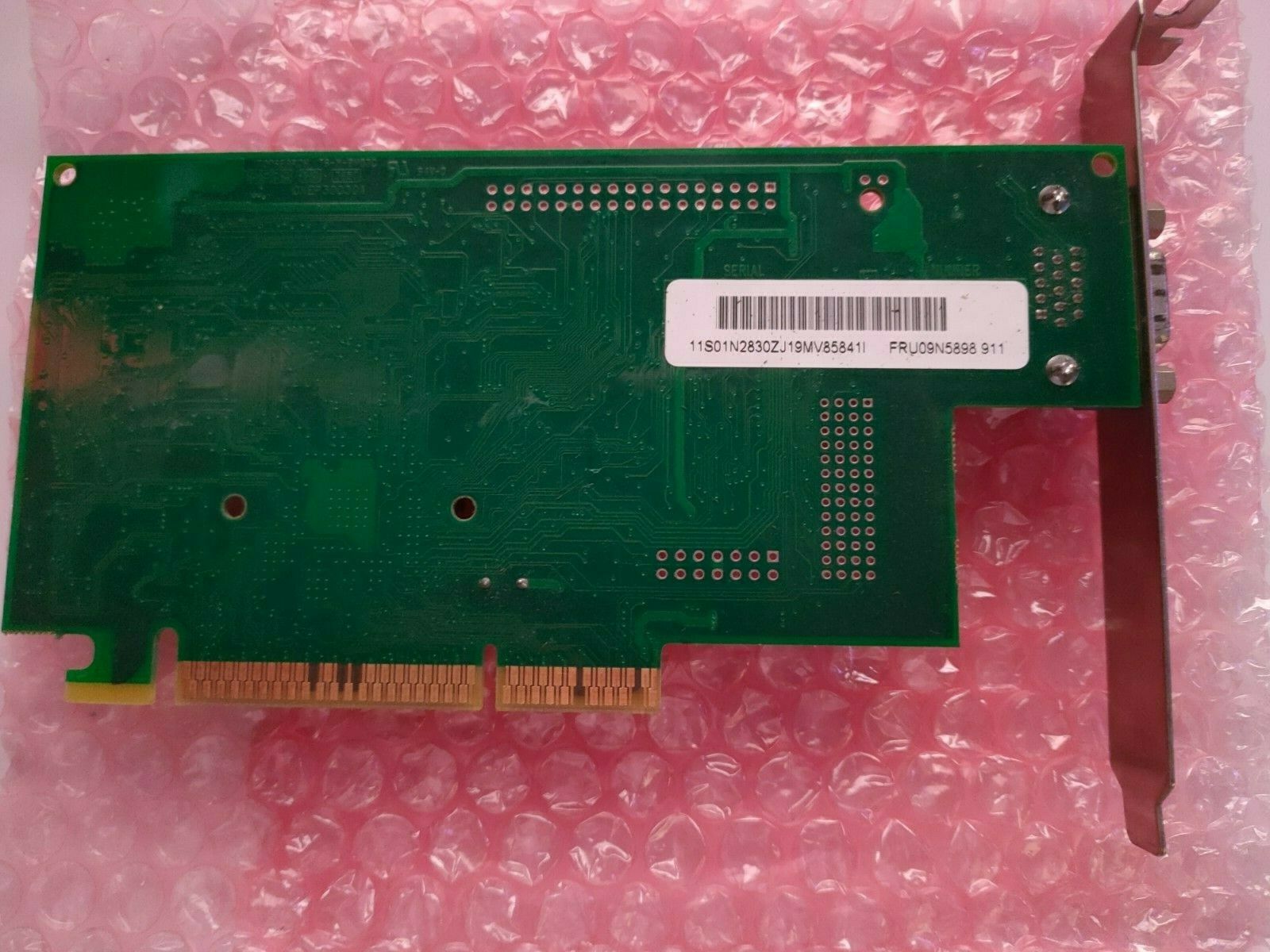
16 or 32 MB cards had half their RAM ICs on the underside of the card.
The LT variant was sometimes embedded on motherboards, including the Shuttle MB21.
The card was able to drive a monitor at 31.5 to 115 kHz horizontal refresh rate and from 60 to 150 Hz vertical refresh rate.
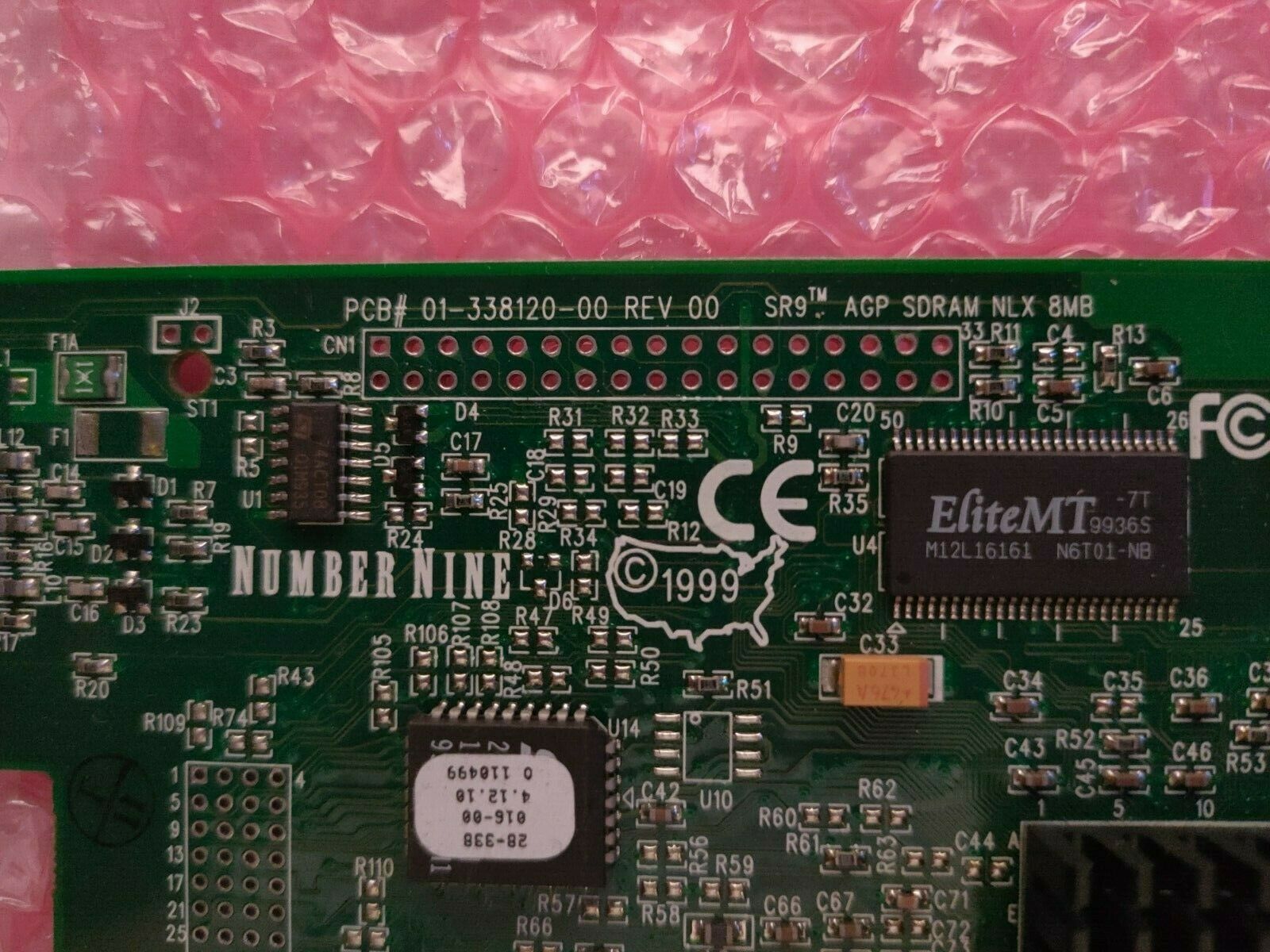
It only came in the NLX form factor as you see in the image above - this was a short-lived format for expansion cards with a gap in the lower part near the faceplate - if I recall correctly, NLX cases had the power supply running along the bottom at the rear of the case, so these 'cut-outs' on the expansion cards allowed them to be used in NLX cases.
Board Revisions
Two board revisions are known: 00 and 02.
Two BIOS versions are known: 4.12.10 and 4.1F.13b.
Competition
In 1999, Savage 4 cards competed directly with the 3dfx Voodoo3 3000 AGP, cards with the ATI Rage 128 chipset (e.g. ATI All-in-Wonder 128), Matrox MGA-G400 chipset (e.g. Matrox Millennium G400), and the nVidia TNT2 Ultra chipset (e.g. Diamond Viper V770 Ultra).
In the Media
Number Nine’s 128-bit SR9 accelerators are compatible with Intel’s announced and upcoming AGP 4X-based motherboards. Additionally, the SR9 will be available in 8-, 16- and 32-megabyte configurations, offering on-the-fly 3D-texture de-compression, 32-bit true-color 3D rendering and support for massive 3D textures as large as 2,048 x 2,048 pixels. These advanced features will allow users to view 3D graphics that are significantly more realistic and life-like. "
Hardware
- S3 Savage4 Processor
- Available in 8, 16 & 32MB memory configurations
- AGP 4X / 2X slot configuration available
- Supports standard CRT and Digital Flat Panel (DFP) monitors*
- High Quality DVD Playback with motion compensation
3D Features
- Single-Pass multiple textures
- True-Color Rendering
- S3TC Texture Compression
- Single-Cycle Trilinear
- Bump Mapping
- Full Scene Anti-Aliasing
- Anisotropic Filtering
- Vertex Buffers
- 8-bit Stencil Buffer
- Triangle Setup Engine
- All DX6 Blending Modes
- Specular Lighting and Diffuse Shading
- W Buffer
- W Fog
- 32-bit Z-Buffering
- MPEG-2 Video Textures
- Sprite Anti-Aliasing
- Palletized Textures
- Perspective Correction
- Vertex and Table Fog
- Triangle Strips and Fans
- Reflection Mapping
- Texturing Morphing
- Shadows
- Procedural Textures
- Atmospheric Effects
- Highly optimized 128-bit graphics engine
- Full featured 2D engine for acceleration of BitBLT, rectangle fill, linedraw, polygon fill, panning/scrolling and hardware cursor
- 8, 16, and 32 bpp mode acceleration
- Comes with HawkEye IV custom display drivers and utilities
- Drivers support Windows 95, 98 and 2000, Direct 3D and OpenGL ICD
Number Nine website, early 2000
Setting it Up
Downloads
Operation Manual
Get in touch if you can provide this missing item! |
Original Utility Disk
Get in touch if you can provide this missing item! |
|


More Pictures
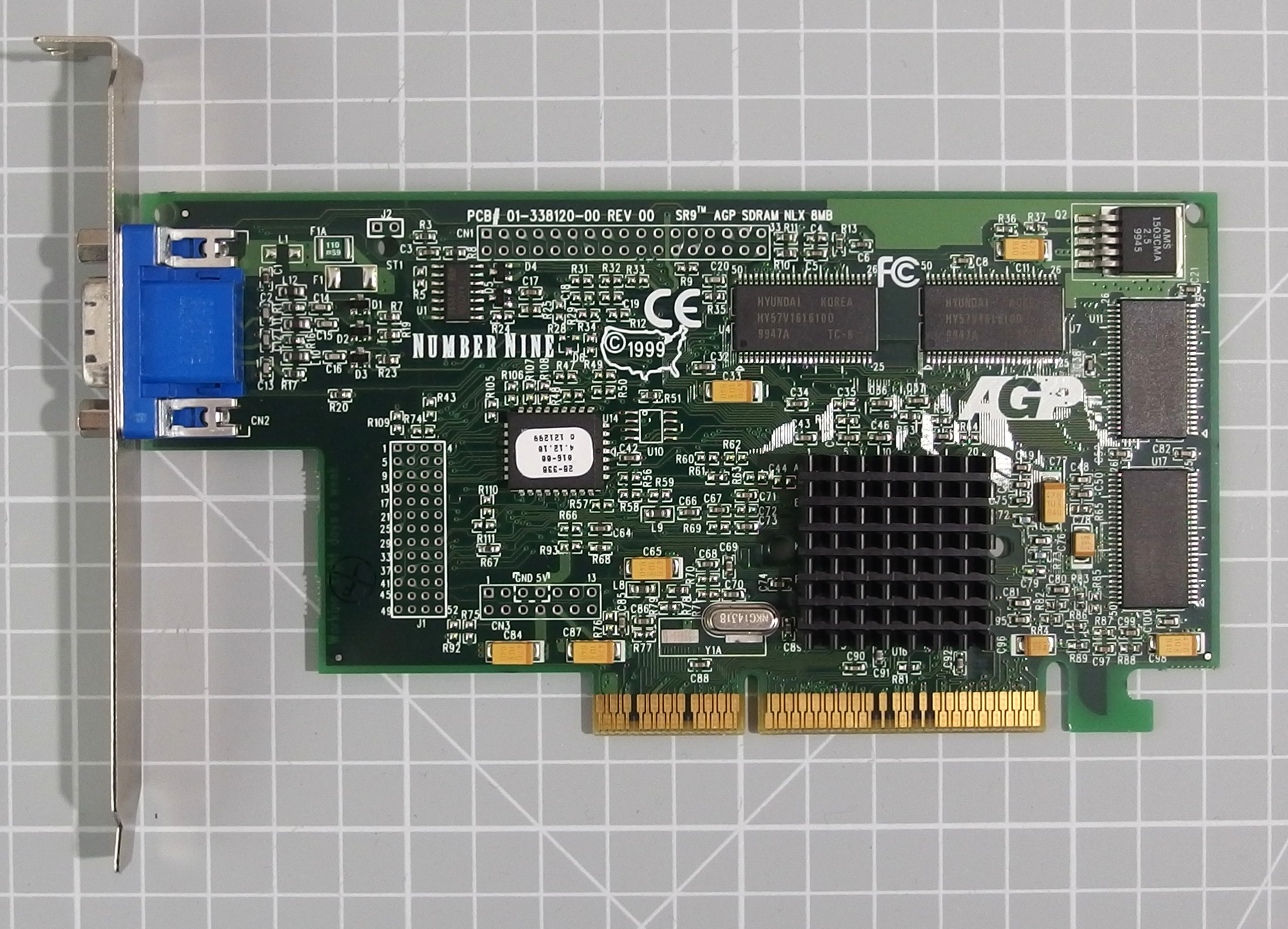
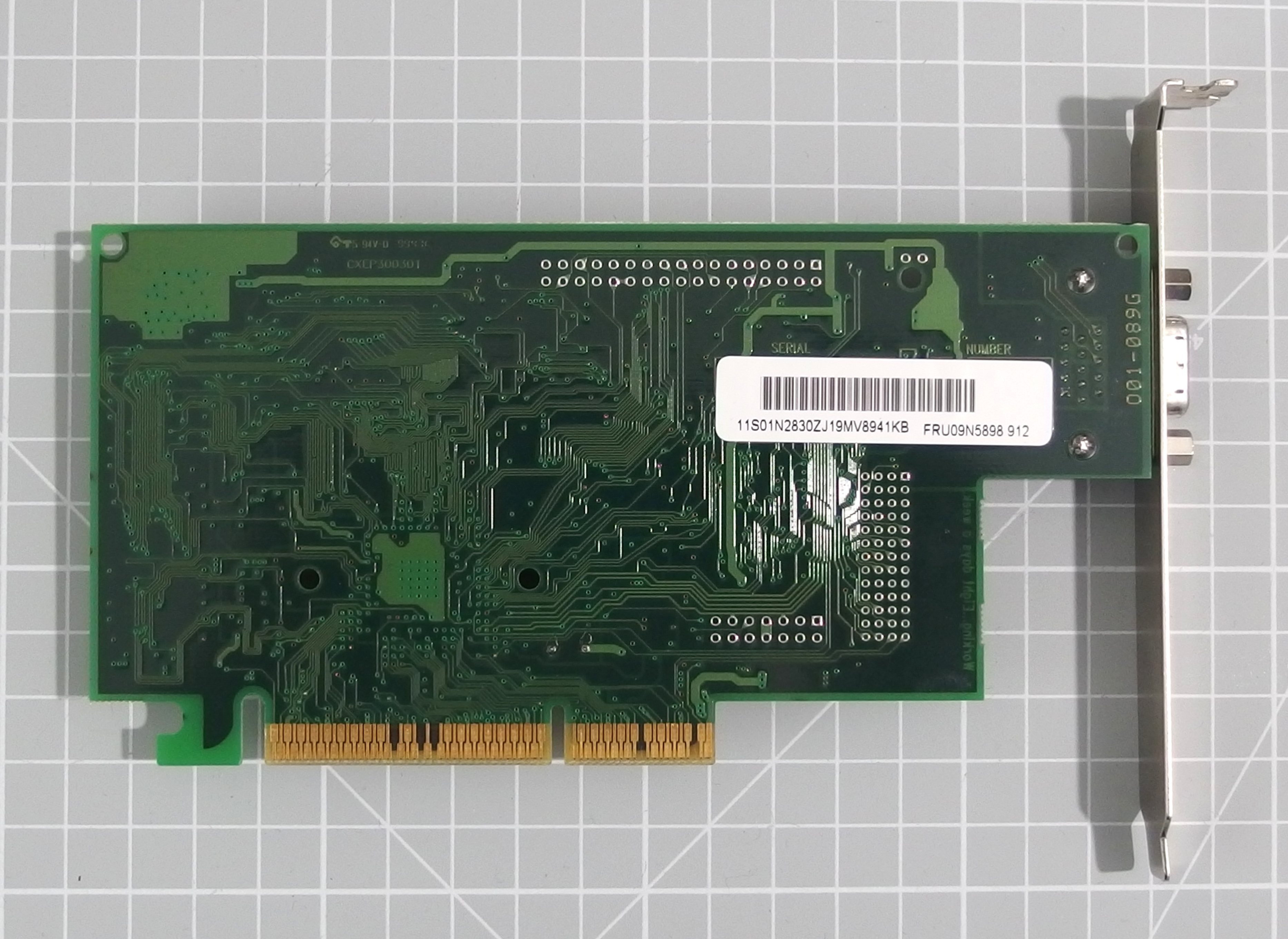
Targeted's Number Nine SR9 8 MB card