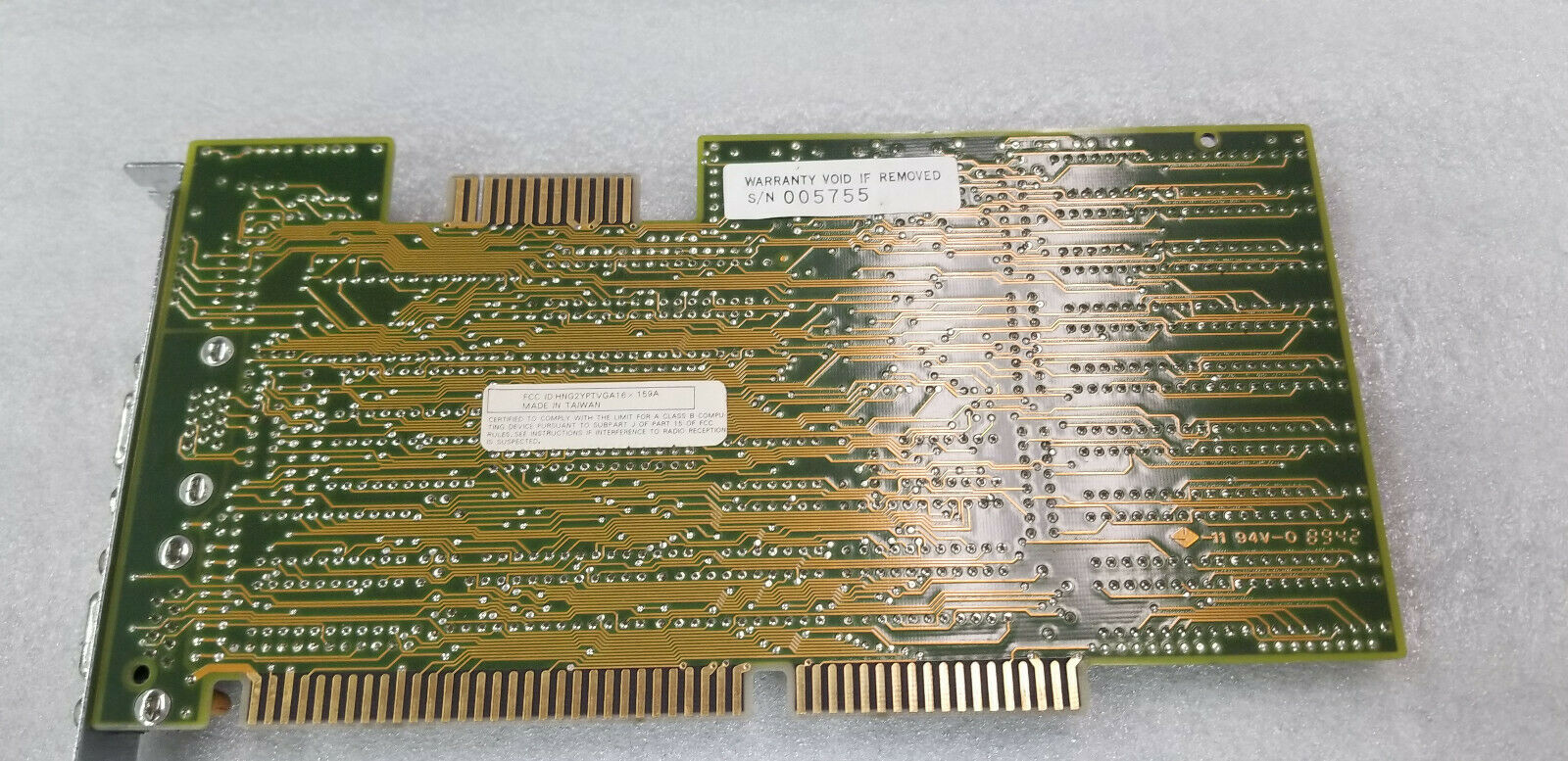
Trident TVGA9000 Series
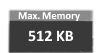
The TVGA 9000 series arrived in 1991, designed to be sold direct to OEMs and the budget retail consumer market. It was arguably a step back in terms of capability compared to the TVGA8900C/CX/CL/D with its limited 512 KB of video memory and kept the same core/memory clock speed of the earlier 8900 variants (40 MHz).
|
Released | 1991 (TVGA9000A, TVGA9000B) 1992 (TVGA9000C) 1993 (TVGA9000i) |
| Bus | ISA 16-bit | |
| Standards | MDA, Hercules, CGA, EGA, VGA, SVGA | |
| Memory | 512 KB (70ns DRAMs) | |
| RAMDAC | External (66 or 80 MHz) Samsung KDA0476 or Music TR9C1710 (both 8-bit 256 colour), Sierra SC11483/SC11487 (15-/16-bit HiColor), Trident TKD8001 (24-bit TrueColor) |
|
| See Also | Trident TVGA8900 Series Trident TVGA9200 Series |


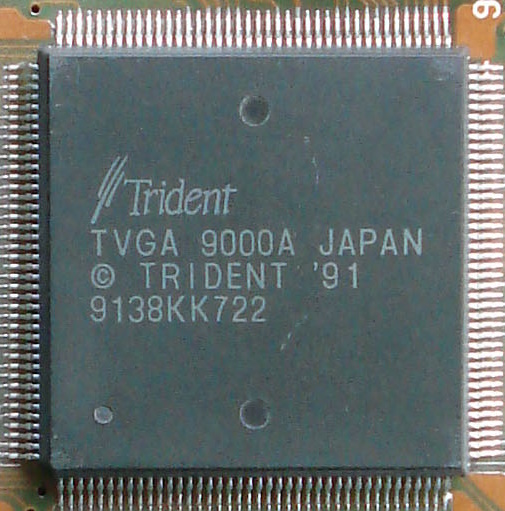
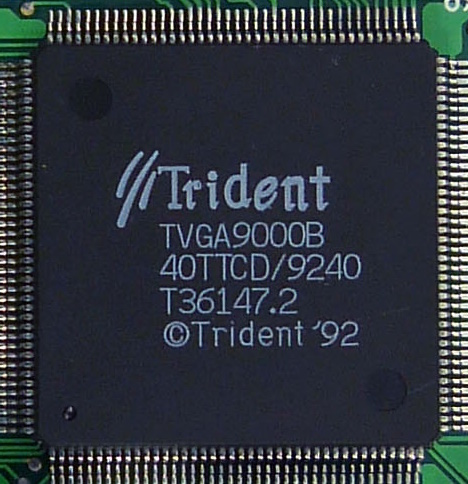
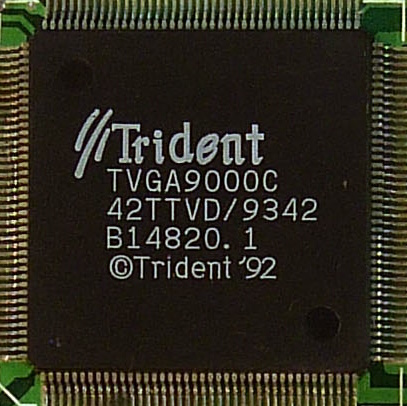
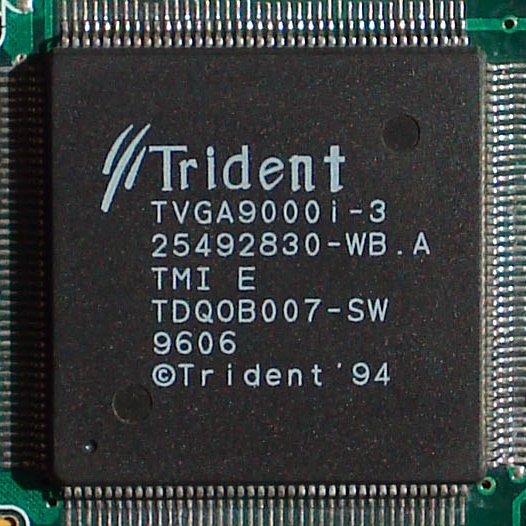
The Trident TVGA9000 series comprised the following variants:
- 9000 (1991) - with sub-variants 9000A, 9000B, 9000C. Maximum of 512 KB video memory.
- 9000i Surf (1993) - integrated 80 MHz RAMDAC and clock generator.
The TVGA9000A was the first of the 9000 series, and typically worked alongside an external 8-bit RAMDAC such as the MUSIC Semiconductor that ran at 66 MHz. Trident produced their own graphics card for this with FCC ID HNG2YPTVGA06X4LS2. Known BIOS versions for the 9000A include vD2.11 dated 16th May 1991.
The TVGA9000B followed soon after with some minor internal updates. Again Trident produced their own cheap video card with an FCC IDs of HNG2VPTVGA06x4LT2 / HNG2YPTVGA06X4LT2. It was also limited to a maximum of 512 KB of video memory. Known BIOS versions for the 9000B include D3.0, dated 12th Nov 1991.
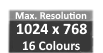
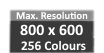
The TVGA9000C was the final small revision of the original 9000 series. The TVGA-9000C was a VGA controller chipset marketed for the lost-cost market. Like the 8900D, the 9000C required just 4 support chips: TKD8001 DAC/clock chip, two 256x4 DRAM chips and the BIOS chip. With programmable DRAM timings a video card manufacturer could opt for slower and cheaper 100ns memory or faster 70 or 80ns memory. The 9000C supported a resolution of up to 1024 x 768 in 16 colours - this was non-interlaced if 80ns memory was used or interlaced if 100ns memory was used. Different TKD8001 DAC variants could be added to the 9000C: a 6-bit variant which permitted up to 800 x 600 interlaced or non-interlaced in 256 colours and an 8-bit variant that gave the same resolution but in 16.7 million colours. Trident had their own card that used this chip (FCC ID: HNG900C-BBD5TITA1).
The TVGA9000i "Surf" was the last of the 9000-series and was quite the design departure from the earlier variants. Now with an integrated RAMDAC and clock generator, the chip count of a low-budget SVGA card was reduced further. It had sub-variants called TVGA9000i-1, TVGA9000i-2, and TVGA9000i-3. Known BIOS versions on 9000i cards include D3.0 (12th Nov 1991) and D4.01E (18th Oct 1993).
In 2017, Sergey Kiselev (www.malinov.com) reproduced a number of 8-bit ISA SVGA cards around the Trident 9000i chipset. These sold for around £60.
The TVGA9000A can be found on the following graphics cards:
- Trident Microsystems (FCC ID: HNG2YPTVGA06X4LS2)
TVGA9000B chipsets can also be found on the following cards:
- Trident Microsystems (FCC ID: HNG2VPTVGA06x4LT2 or HNG2YPTVGA06X4LT2)
TVGA9000C chipsets can be found on these cards:
- Trident Microsystems (FCC ID: HNG900C-BBD5TITA1)
TVGA9000i chipsets can be found on these cards:
- Trident Microsystems (FCC ID: HNG2VPTVGA06x4LT2 - yes, the same as the above 9000B)
- Trident Microsystems (FCC ID: HNG900C-BBD5TITA1 - yes, the same as the above 9000C)
- Serdaco TVGA9000i card (introduced in 2017)
Competition
There was certainly a significant overlap of 2 years in chronology when both the TVGA8900 series was still selling alongside the introduction of the first TVGA9000 series, so it's likely Trident's marketing department would be pushing the 'new' 9000 as the lower-budget low-component count offering, with the 8900C/CL/CX/D at a higher price point.
A year after the 9000 hit the market, Windows 3.1 arrived. This further pushed the need for higher screen resolutions, and the first 2D graphics accelerators came with it. This, however, came at a price. Not everyone could afford a Number Nine #9 GXiTC card or even a Diamond SpeedStar 24X. This is where Trident's wallet-friendly cards came in - especially for OEM system builders looking to maximise their margins while still claiming their PCs supported 1024 x 768 resolutions. (I'm sure many new PC owners in 1992 were disappointed it wasn't even in 256 colours, though!).
Sheer CPU might would offset this to an extent, as 1992 saw the first clock-doubling with the 486DX2-50 and 486DX2-66.
ATi, Orchid, and Diamond's R&D labs were all busy working on their next graphics accelerators, often leveraging newcomer S3 with their first accelerator chipsets, the 86C911 and 86C924.
In the Media
Perhaps due to the low-budget nature of these chipsets, or the fact they didn't sell much (if any) to the retail market, there was very little publicity given to the TVGA9000 series.
Setting it Up
Some TVGA9000 cards have a few jumpers. Usually a single jumper exists to set interlaced (short) or non-interlaced mode (open), and a jumper block of three together is used to set whether the card is installed in an 8-bit ISA slot or a 16-bit one (set all the jumpers to the same, either open for 16-bit, or short for 8-bit). These are generalisations, and if possible check your card's user manual to get the correct settings for your specific card.
Downloads
TVGA 9000 Datasheet Trident TVGA9000 Graphics Controller datasheet |
TVGA 9000C Datasheet Trident TVGA9000C Graphics Controller datasheet |
TVGA 9000i Datasheet Trident TVGA9000i Surf Graphics Controller datasheet |
TKD8001 Datasheet Trident TKD8001 RAMDAC datasheet |
TVGA9000C User Manual 9000C MkII card's user manual |
Windows 3.1 Drivers / Utilities
Includes Windows 3.1 high-res display drivers. Also works for TVGA8900 series and later 9440, possibly more. |
Windows 95 Beta Driver
Non-Accelerated Windows 95 driver for 9420DGI VL/PCI, 9440VXi VL, and 9440 AGi VL. Also works on 8900C, 8900CL, 8900D, and 9000i. |
TVGA9000A ROM BIOS A 32 KB ROM BIOS dump |
TVGA9000B ROM BIOS A 32 KB ROM BIOS dump |
TVGA9000i ROM BIOS A 32 KB ROM BIOS dump |



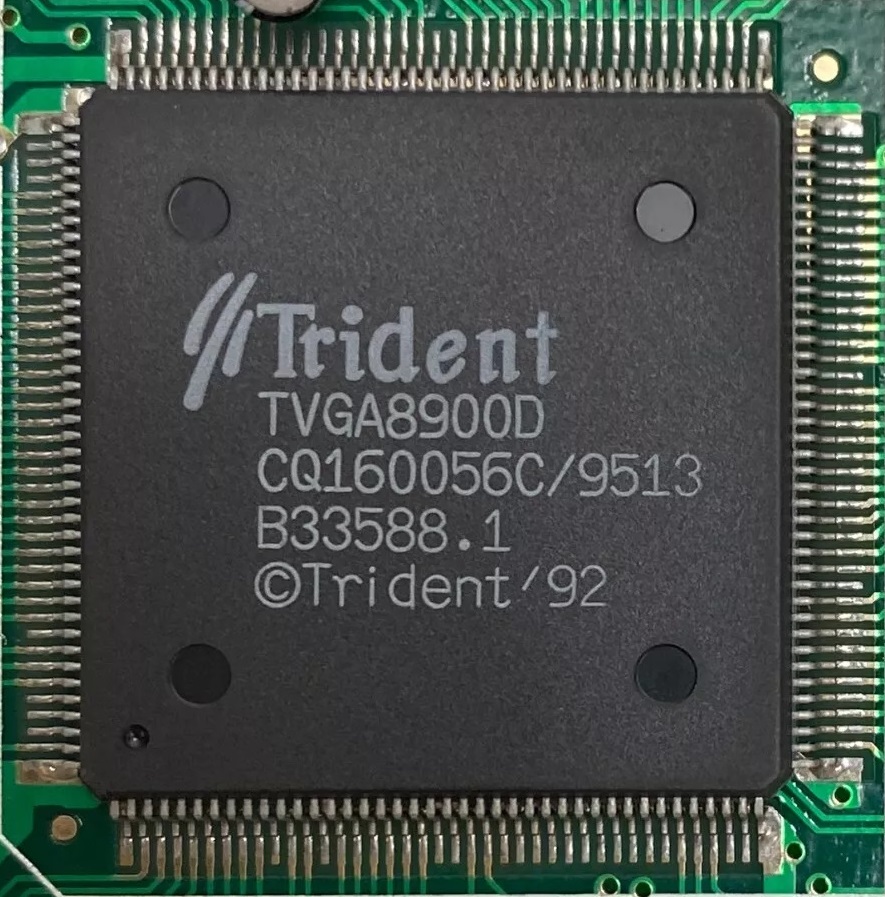
More Pictures
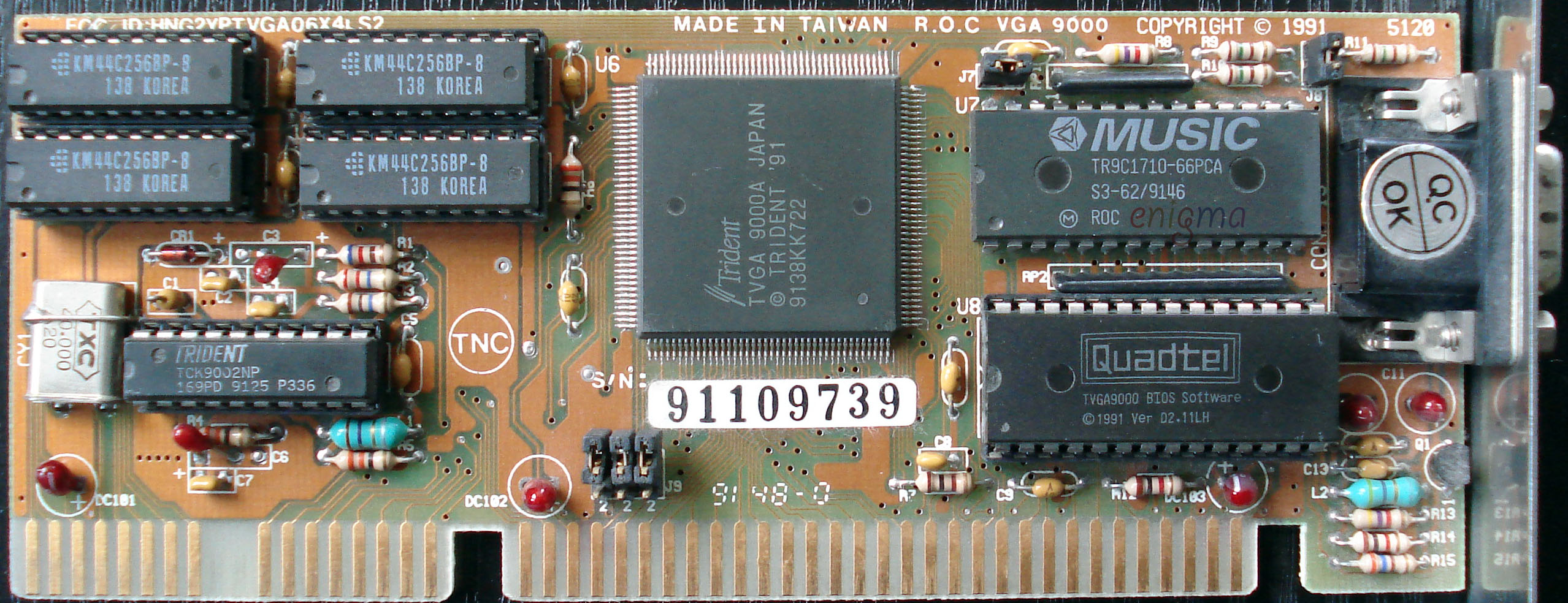
A 1991 Trident
TVGA9000A card, picture courtesy of Retronn.de (FCC ID: HNG2YPTVGA06X4LS2)
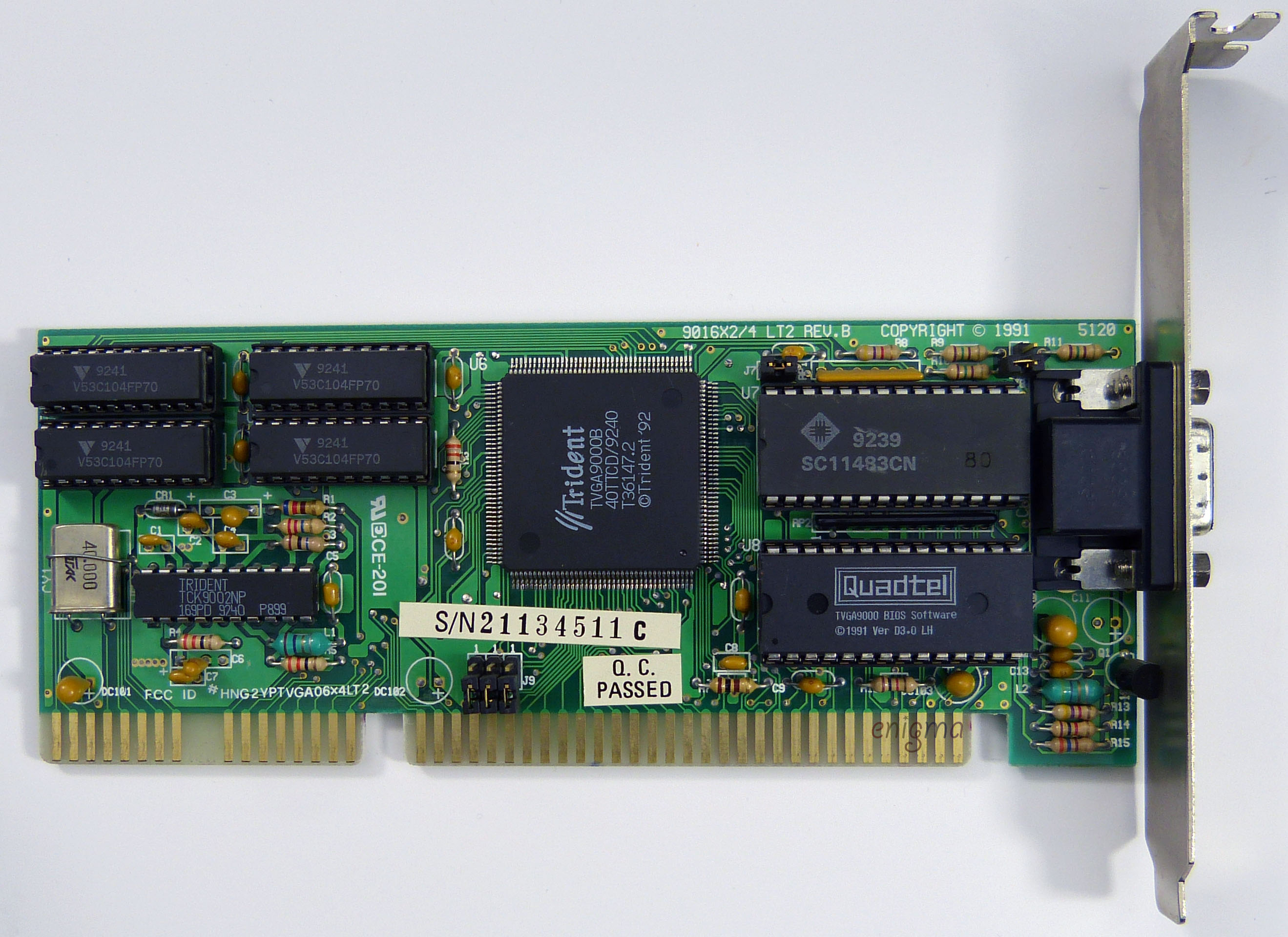
A 1991 Trident
TVGA9000B card with 80 MHz Sierra RAMDAC, picture courtesy of Retronn.de (FCC ID: HNG2YPTVGA06X4LT2)
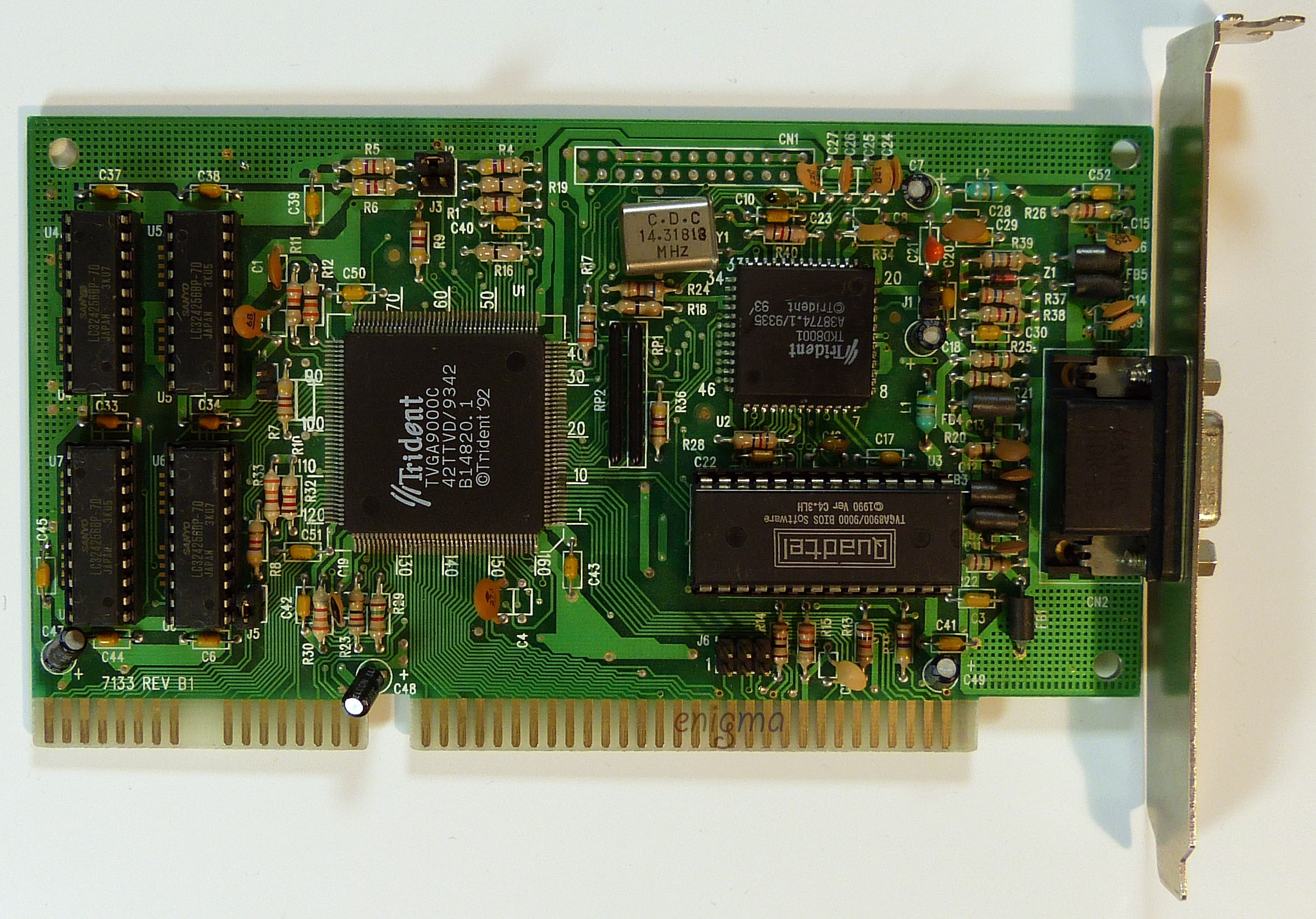
A 1993 Trident
TVGA9000C card with 80 MHz Trident RAMDAC, picture courtesy of Retronn.de
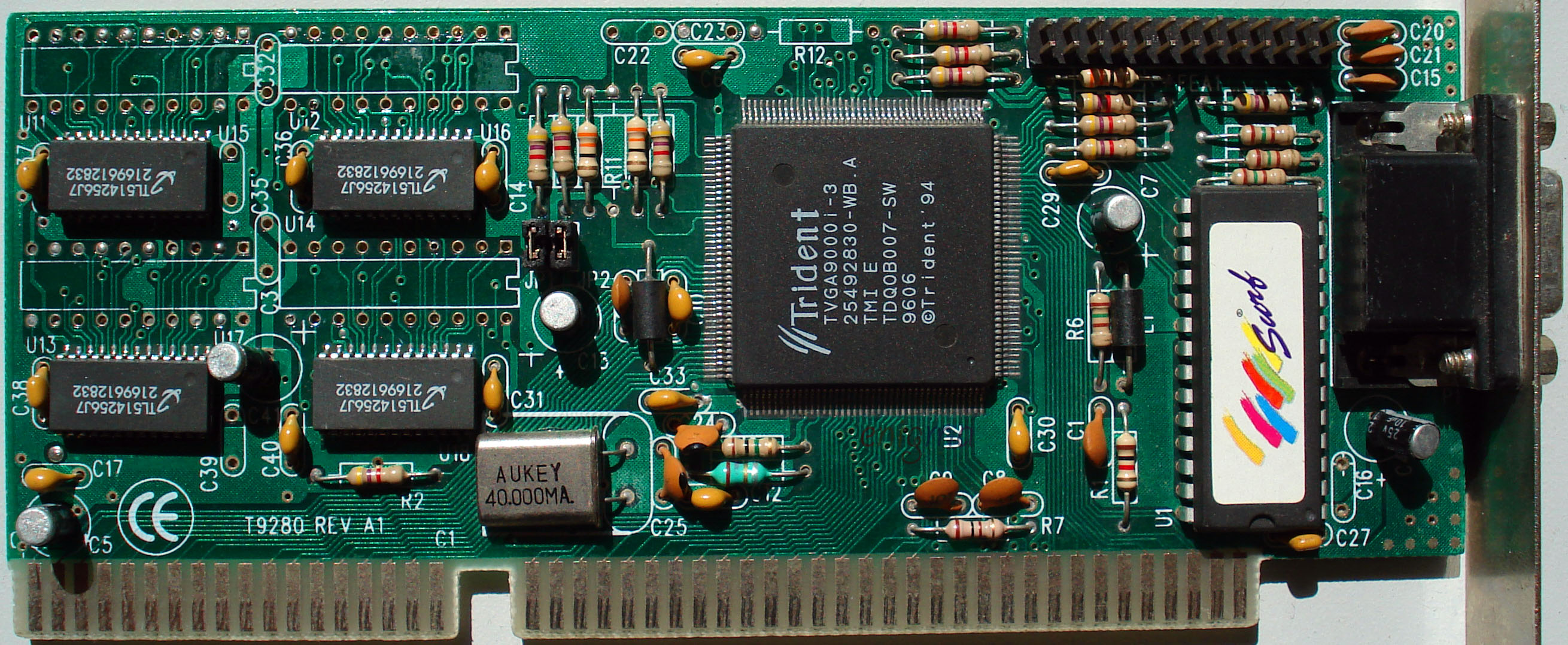
A late Trident
TVGA9000i card from 1996, picture courtesy of Retronn.de
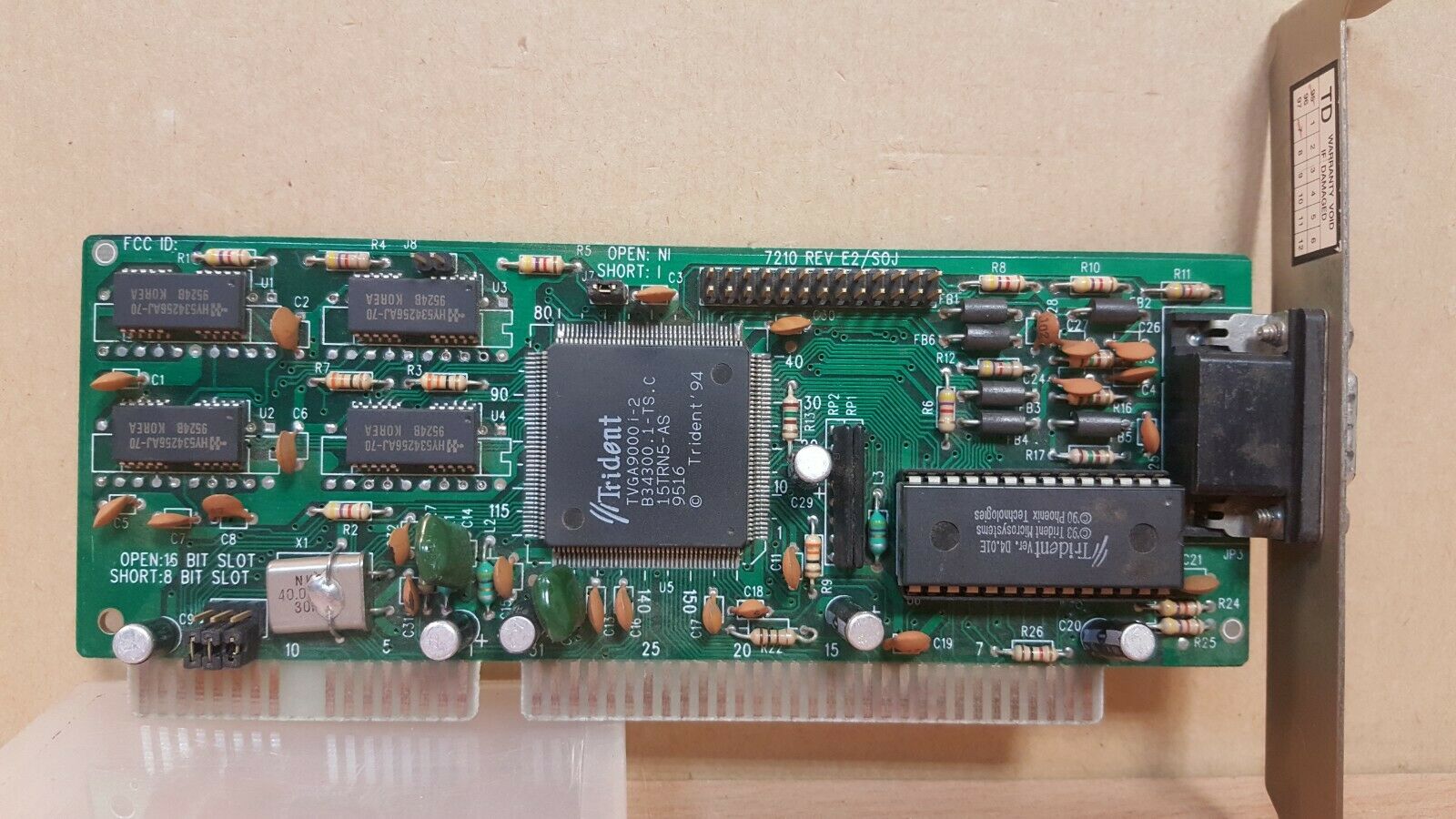
A Trident TVGA9000i graphics cards
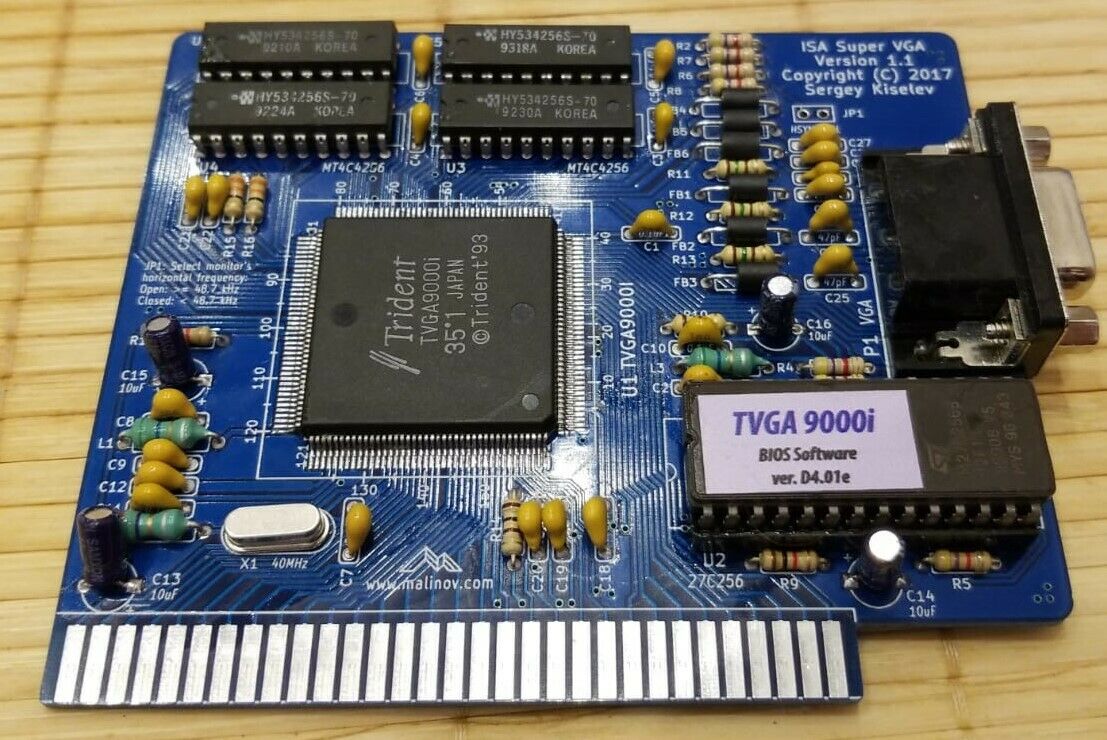
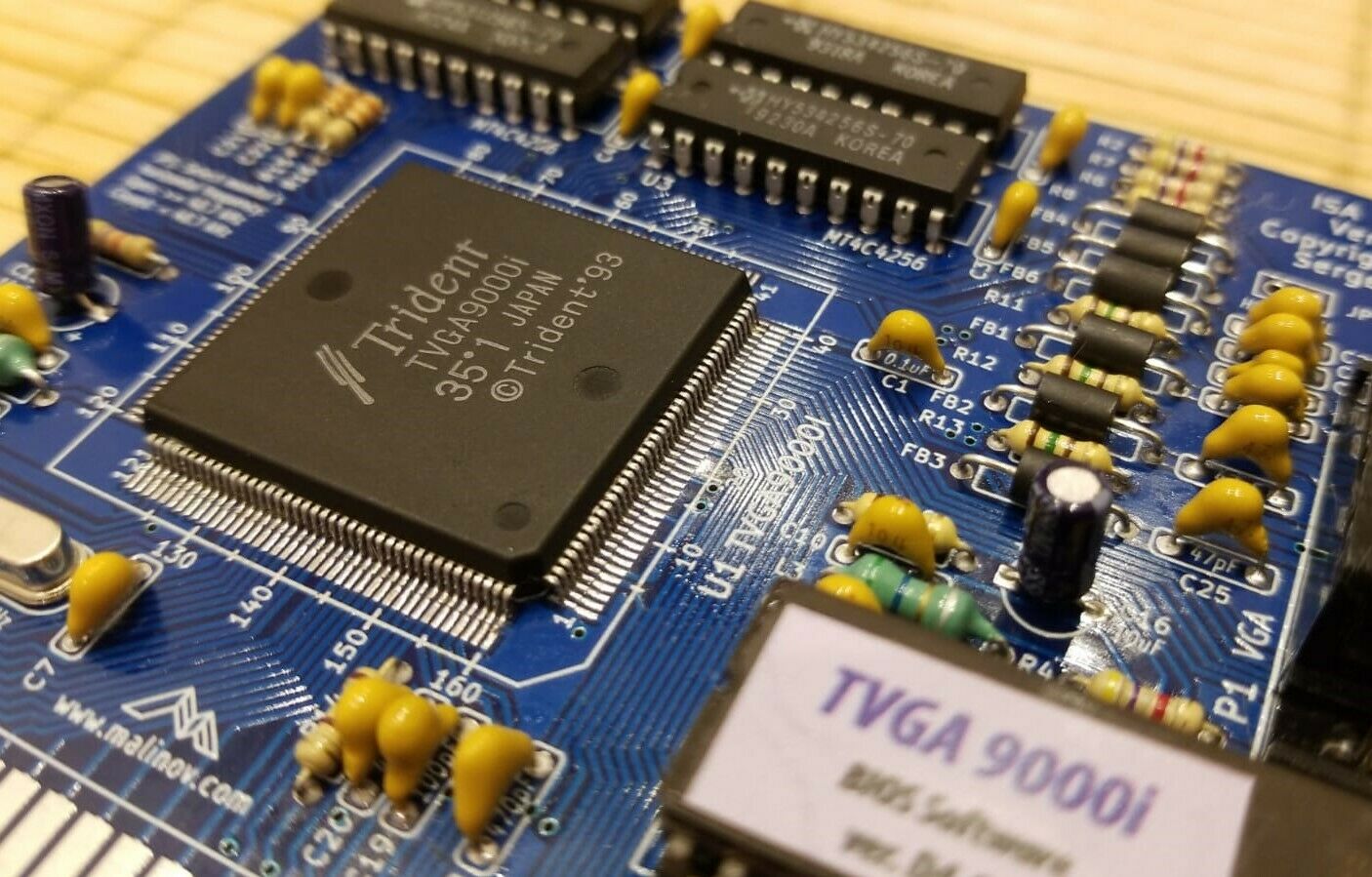
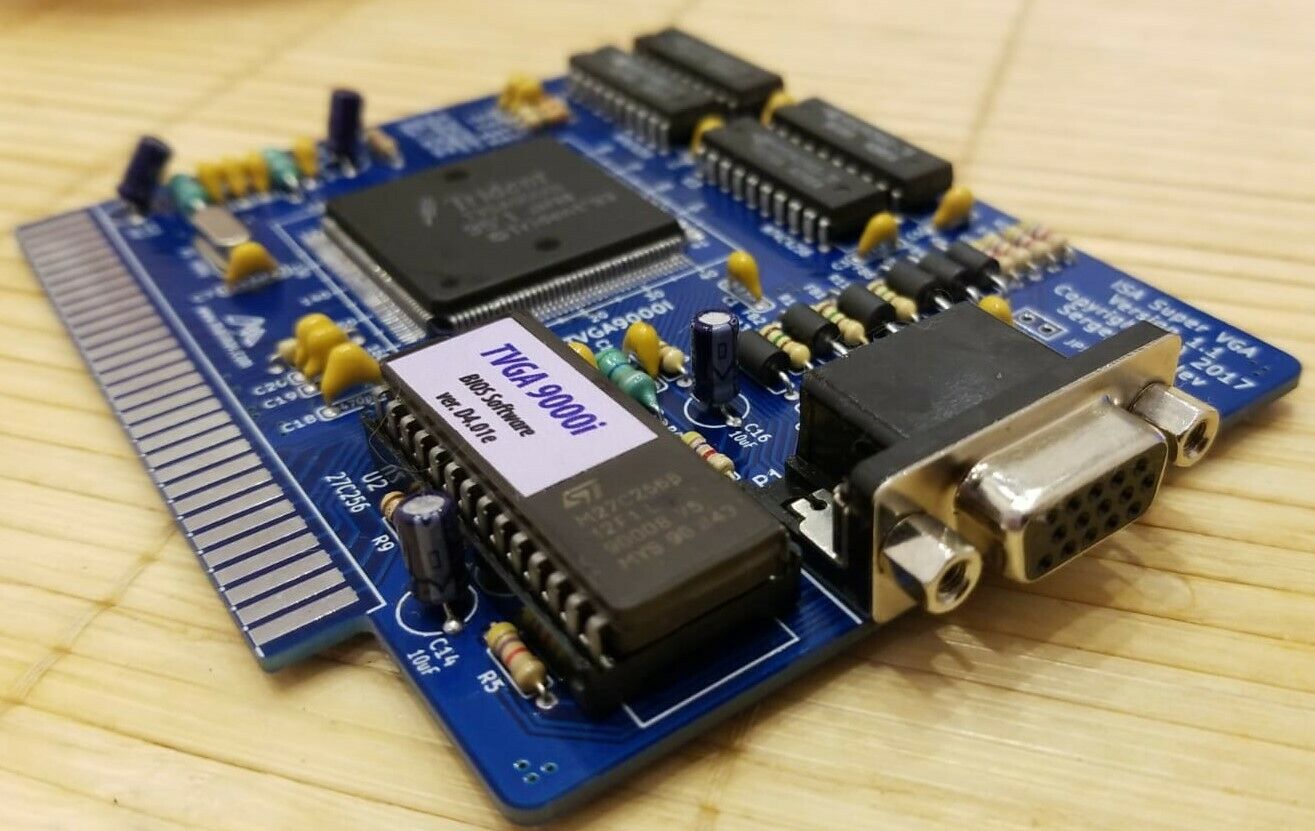
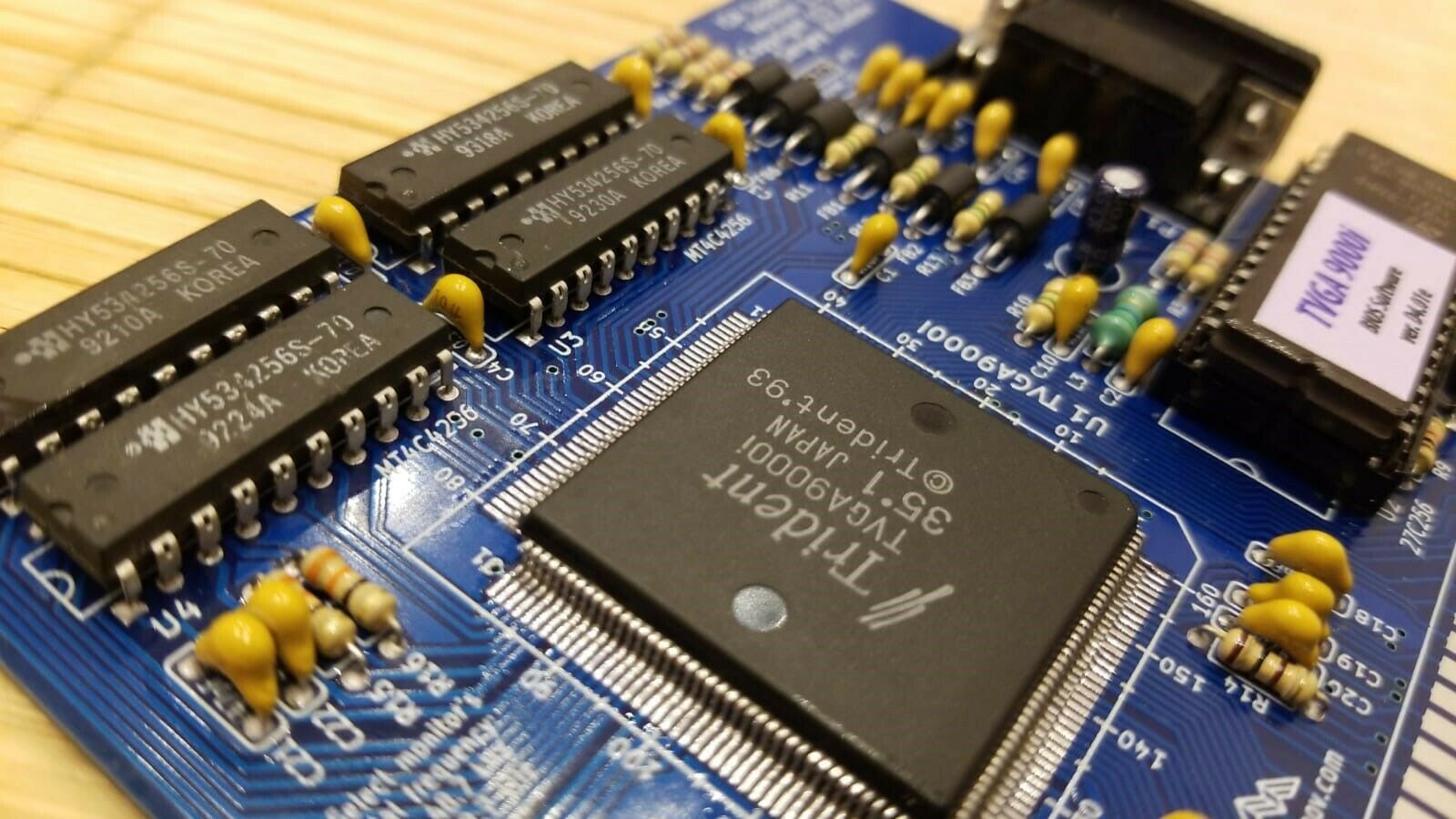
Sergey Kiselev's modern-day TVGA9000i 8-bit ISA card