Let's Explore: IBM OS/2 v2.11 - Part 3
4th July 2026
In this Part 3, we'll install some applications and see how they fare. We'll also run some DOS games and see if there are any limitations or incompatibilities.
OS/2 Native Applications
In the early 90s, a number of prominent software houses wrote OS/2-specific versions of their applications. Most notable among them was Lotus Development Corp., who released 1-2-3, Organizer, cc:Mail, SmartSuite, Domino, Ami Pro 3, and Word Pro in OS/2 form. You could of course just install the Windows version and run it in Win-OS2, but native OS/2 applications could of course take advantage of the better and faster 32-bit architecture provided by OS/2.
Others include Netscape Navigator/Communicator (for Warp), Ventura Publisher, Norton Commander, WordPerfect 5.2, Freelance Graphics, CorelDRAW!, DataEase, DisplayWrite, McAfee VirusScan, Micrografx Designer, Aldus PageMaker, Microsoft Excel, Microsoft Multiplan, R:Base, Stacker, Microsoft SQL Server, Borland Sidekick, Borland ObjectVision, AutoCAD, Borland C++, StarOffice, StarWriter, Topspeed C, Watcom C/C++, and Borland Pascal 7.0.
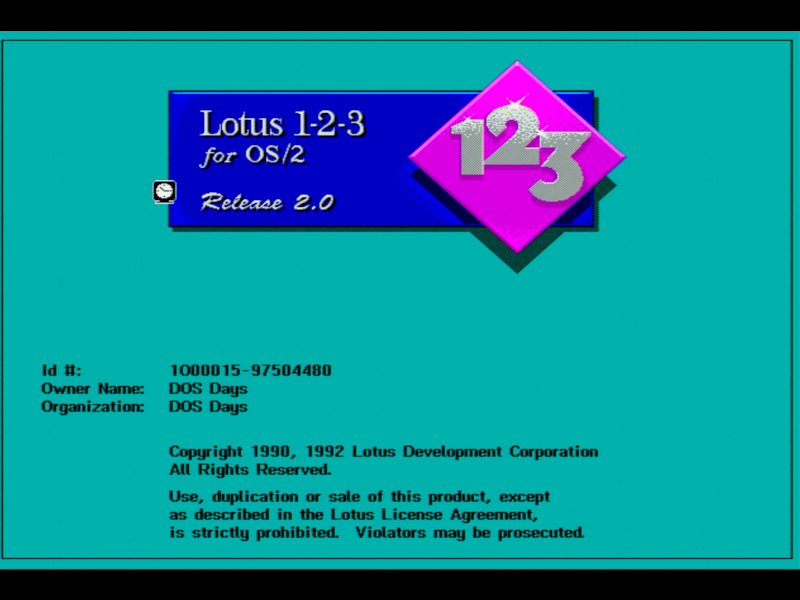
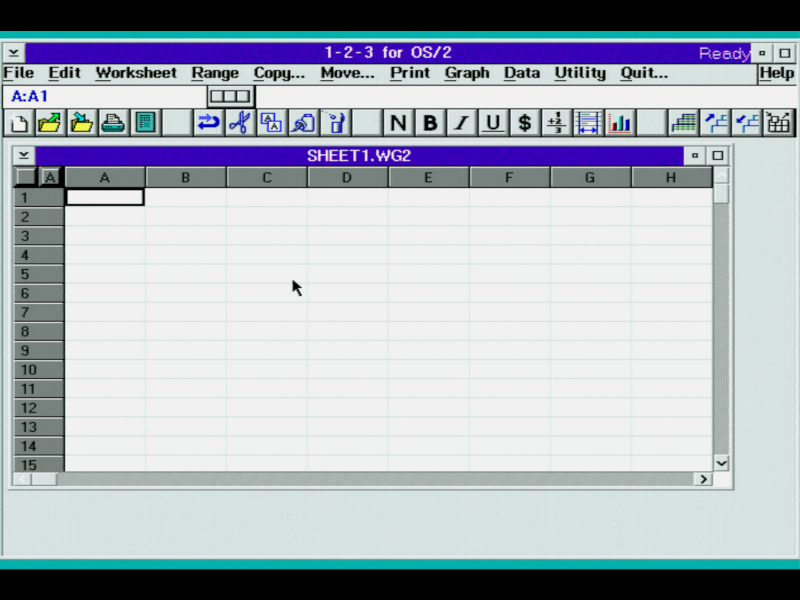
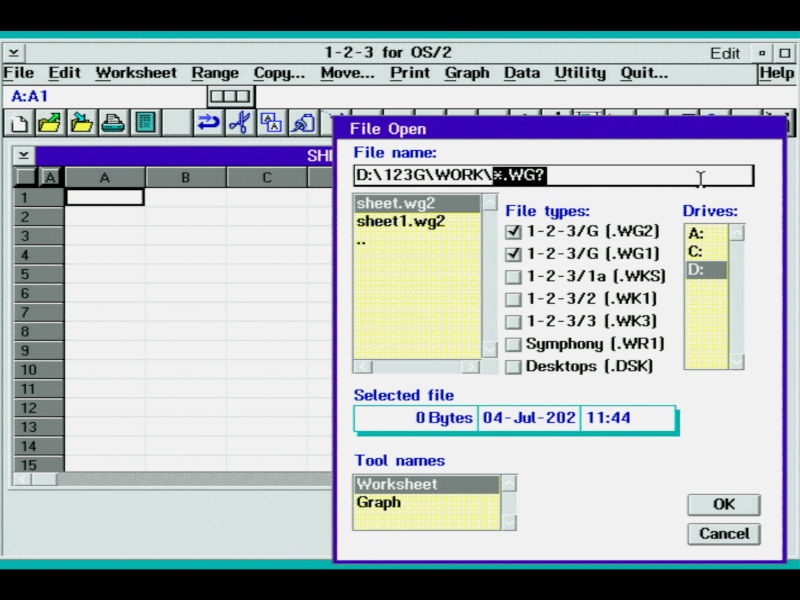
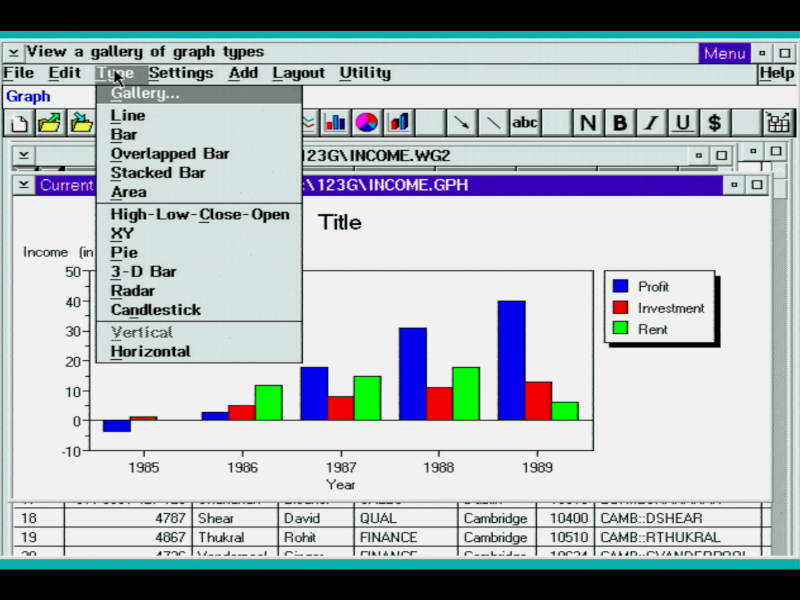
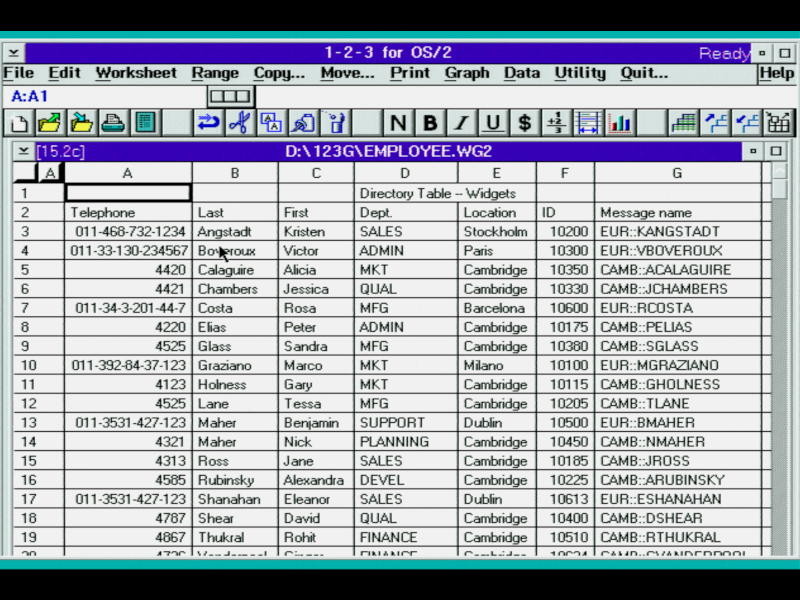
Lotus 1-2-3 for OS/2 v1.0
This version of Lotus 1-2-3 came with SmartSuite 1.0, which was designed for OS/2 1.x. OS/2 2.x is 100% backward-compatible with OS/2 1.x applications.
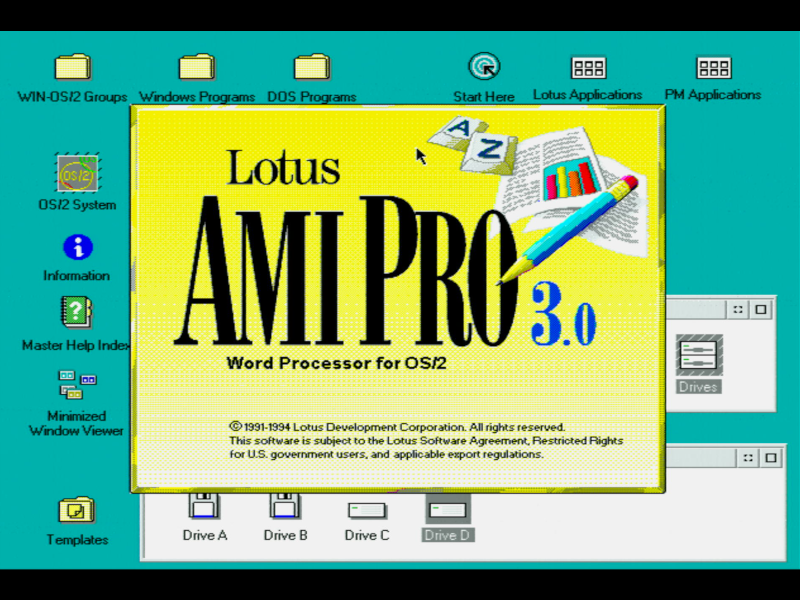
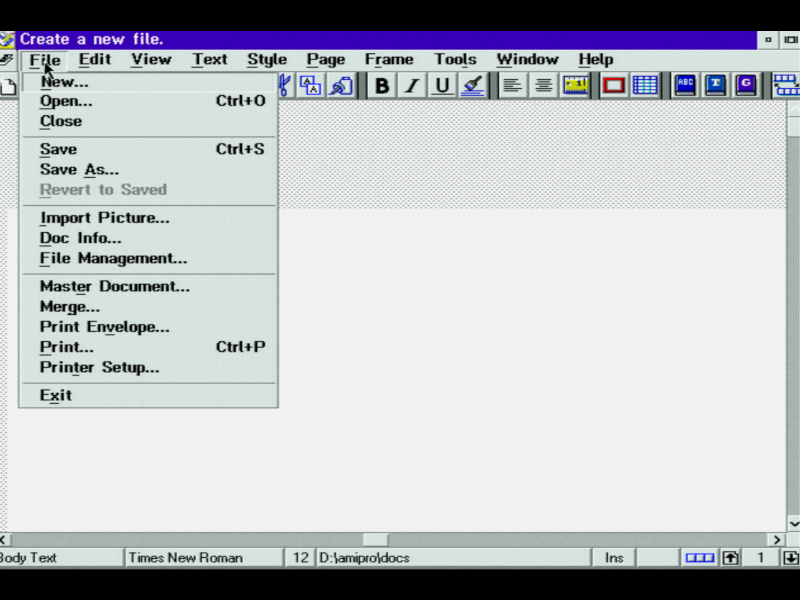
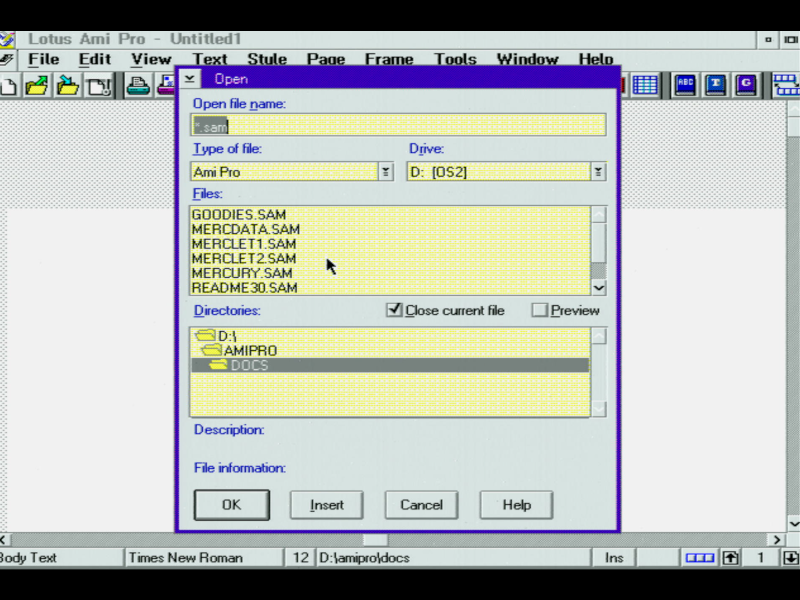
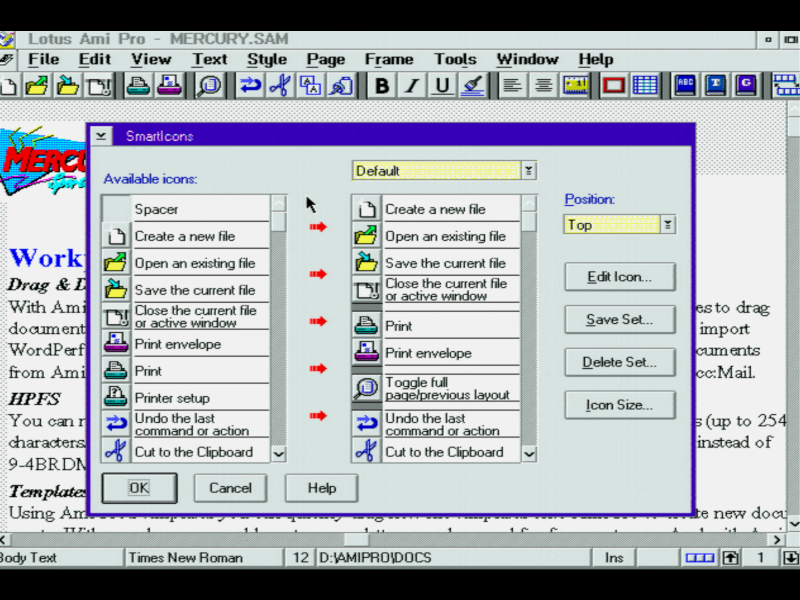
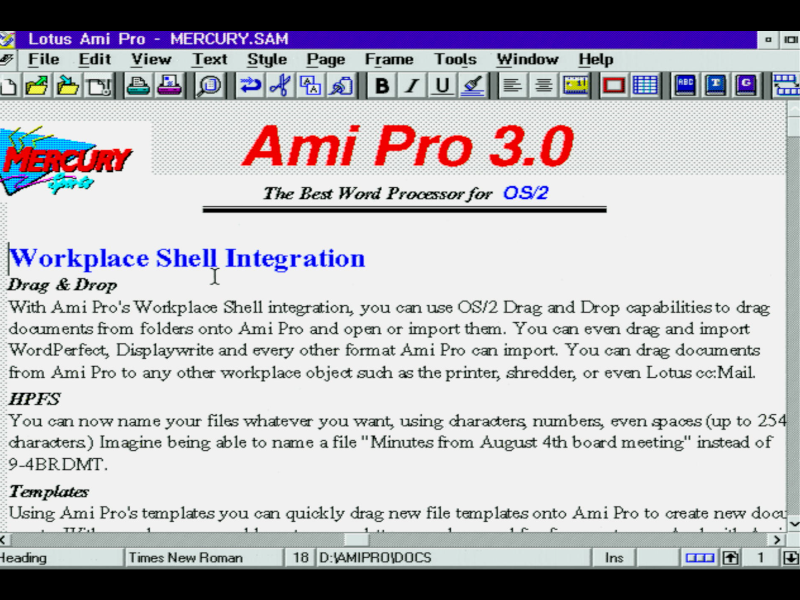
Lotus Ami Pro v3.0b for OS/2 v2.x
Ami Pro 3.0b was written for OS/2 2.x, so is a full Workplace Shell application. It was a feature-rich word processor with full WYSIWYG document editing, HPFS file system support with long filenames, REXX integration for custom complex macros, a BASIC-like macro language, supported Dynamic Data Exchange (DDE) between applications, styles, graphics imports, and UI customisation with SmartIcons.
Documents could be imported from all the main competitors formats including WordPerfect 5.x, WordStar 5, Microsoft Word for Windows 1.x-2.x, MultiMate 3 or 4, Excel, DisplayWrite, Lotus 1-2-3, Lotus Organizer, and of course ASCII, DCA, and Rich Text Format. You could also import pictures in BMP, PCX, TIFF, CGM, and more.
I tried to install Ventura Publisher for OS/2 (it's designed for OS/2 1.x Presentation Manager), and while the installation ran smoothly, running it threw up this error:
OS/2 2.x is supposed to be able to run OS/2 1.x programs, so I'm not sure why this didn't work.
Windows 3.x Native Applications
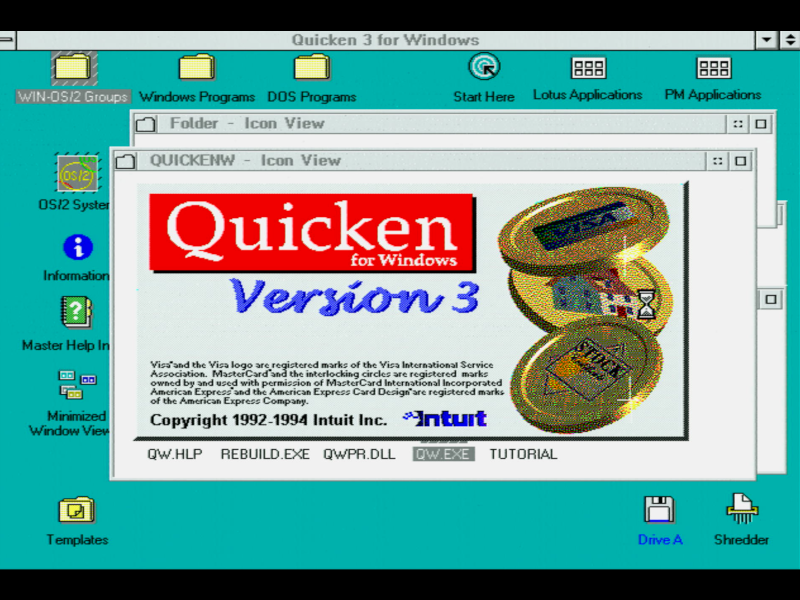
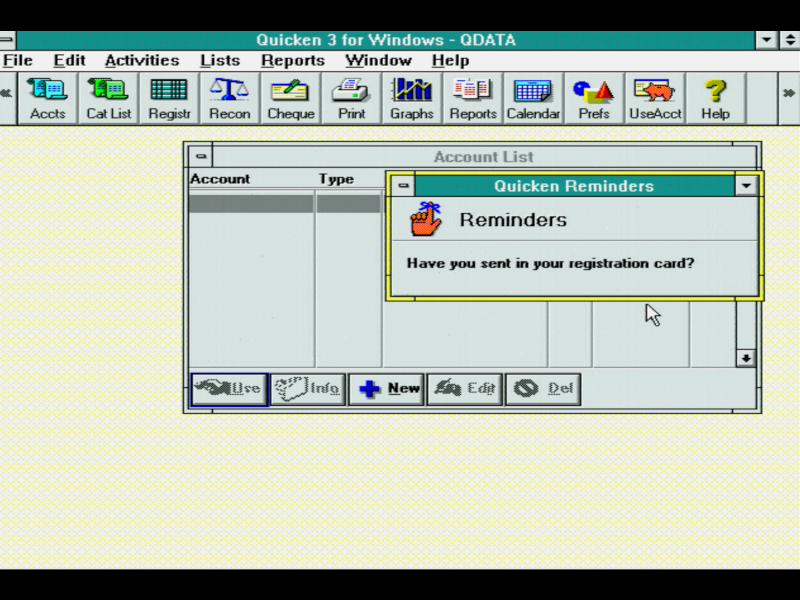
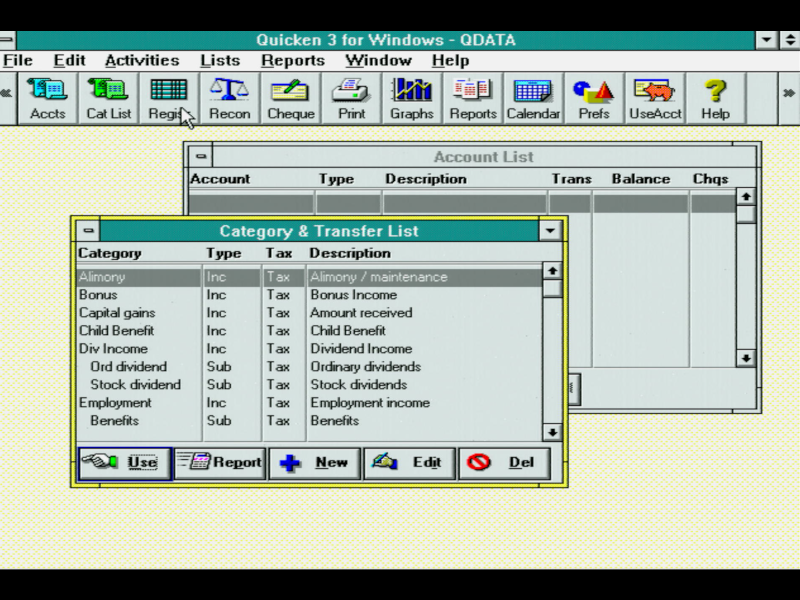
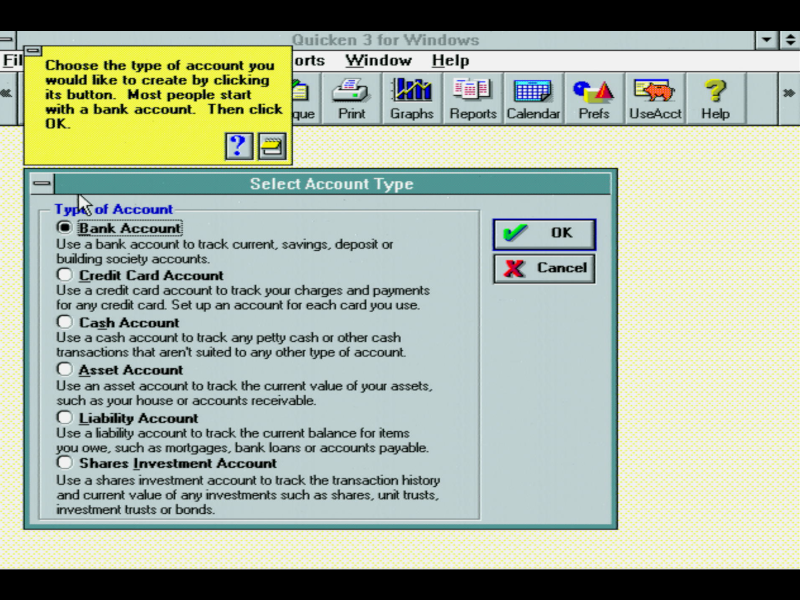
For a quick Windows test I ran Quicken for Windows, as I already had it installed on my current retro setup:
Running DOS Programs
DOS programs all ran without any problems whatsoever. I would say that running games in a window did incur some lag compared to full-screen as you would expect, but they did still run without issue. Moving to a DOS full-screen window ran games and apps flawlessly. Bear in mind this was with the default VGA graphics drivers that OS/2 installed (the graphics card was a 16-bit ISA Tseng Labs ET4000).
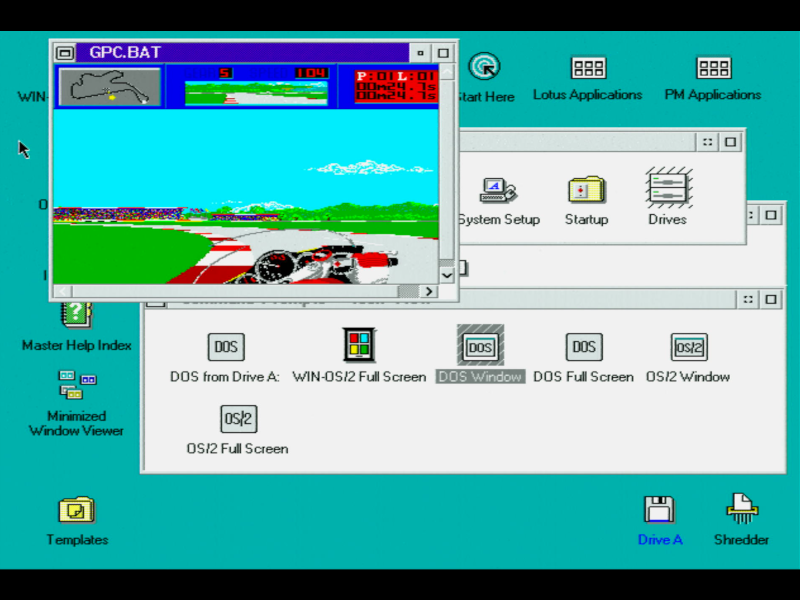
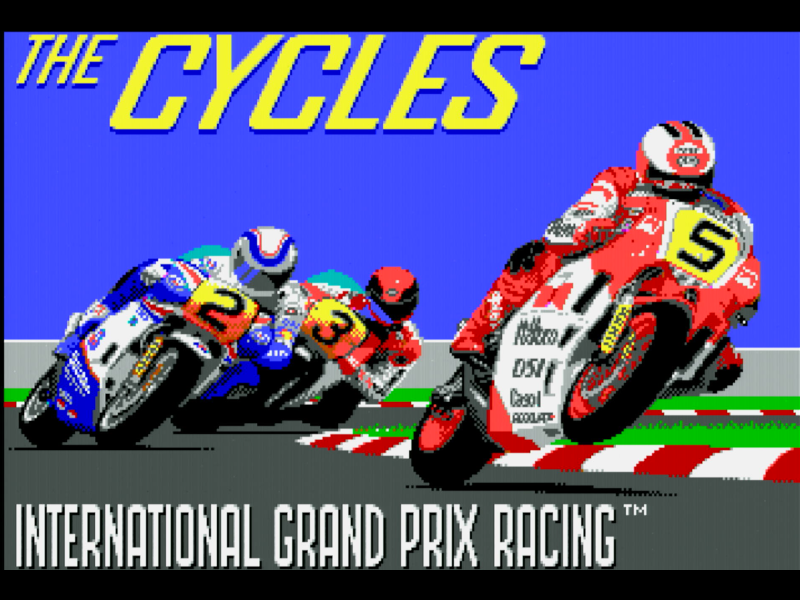
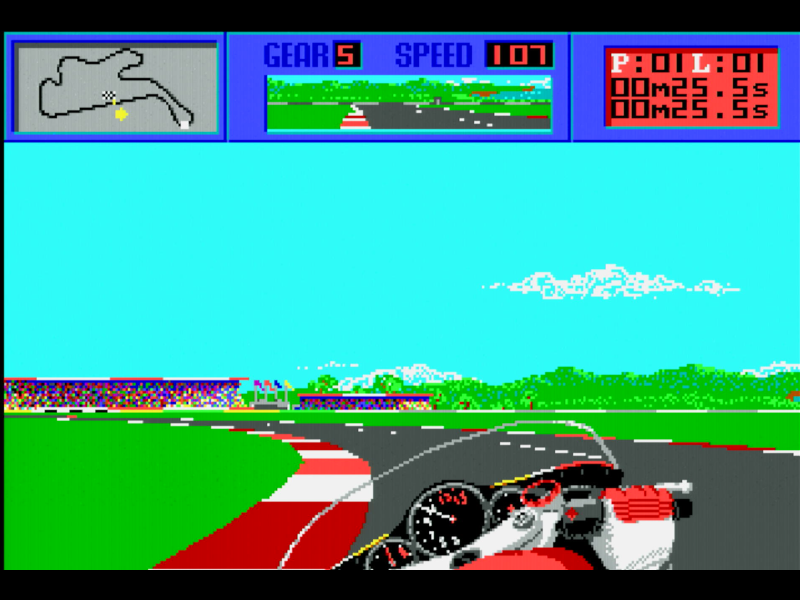
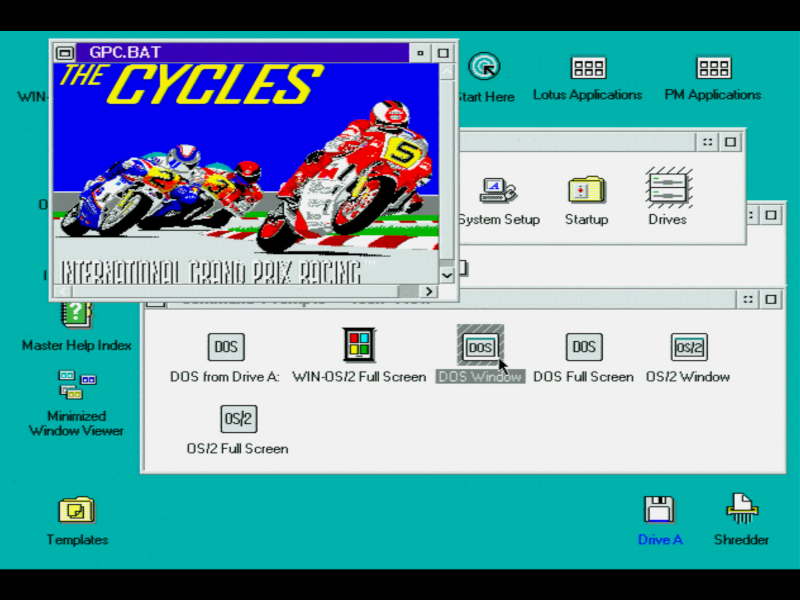
The Cycles by Accolade, a 16-colour EGA game running in a DOS window, and below in a DOS full-screen session
While running the game handled Ad Lib sound perfectly, when in windowed mode the colouring was a bit "off" (note the white track colour which should be grey).
I then installed the Tseng Labs ET4000 drivers for OS/2 and opted for 800 x 600 in 65,536 colours. I then tried Raptor: Call of the Shadows:
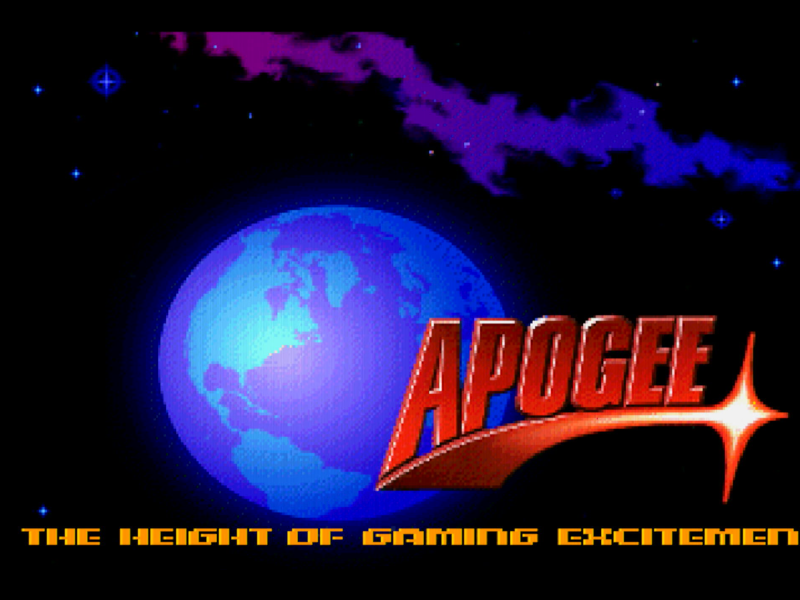
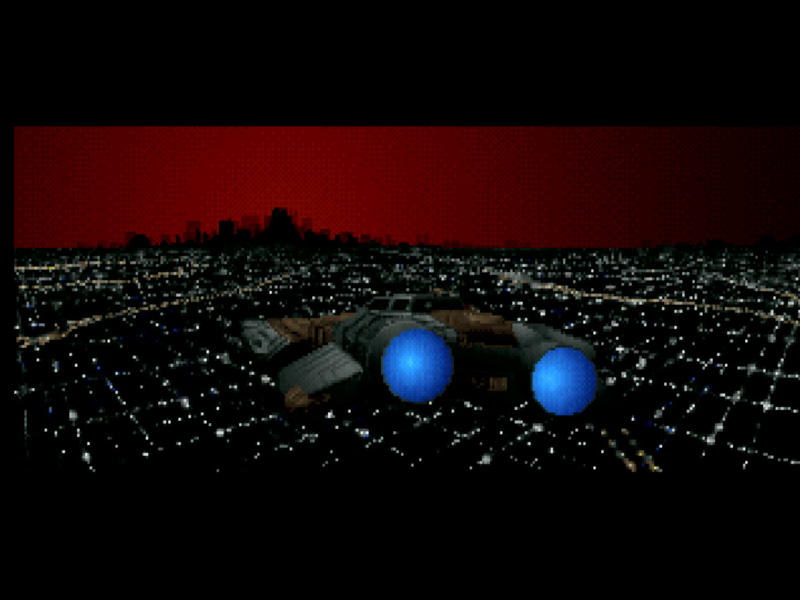
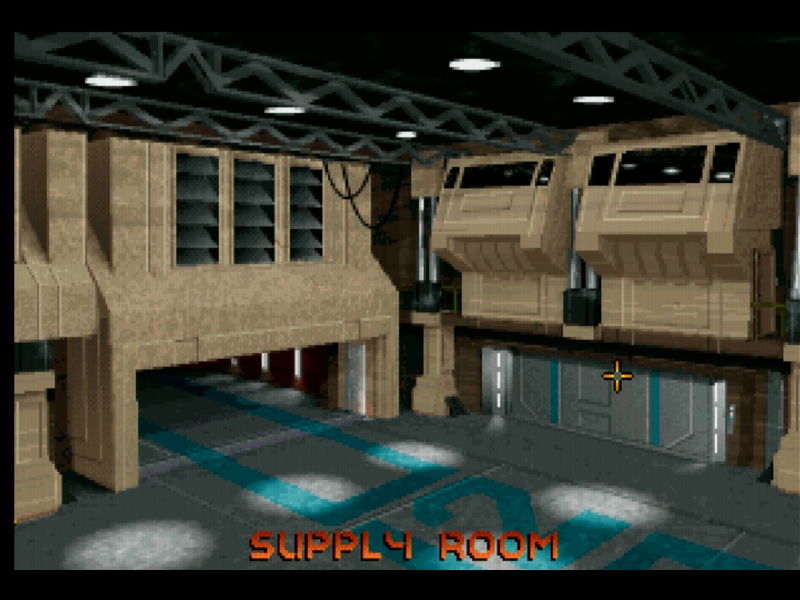
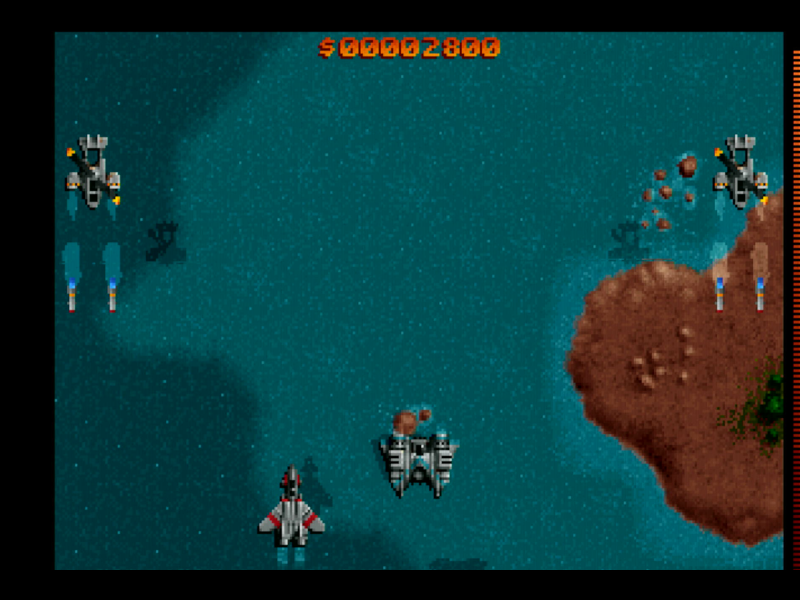
Again, no issues with either Sound Blaster audio or graphics - it ran as if it were in pure DOS.
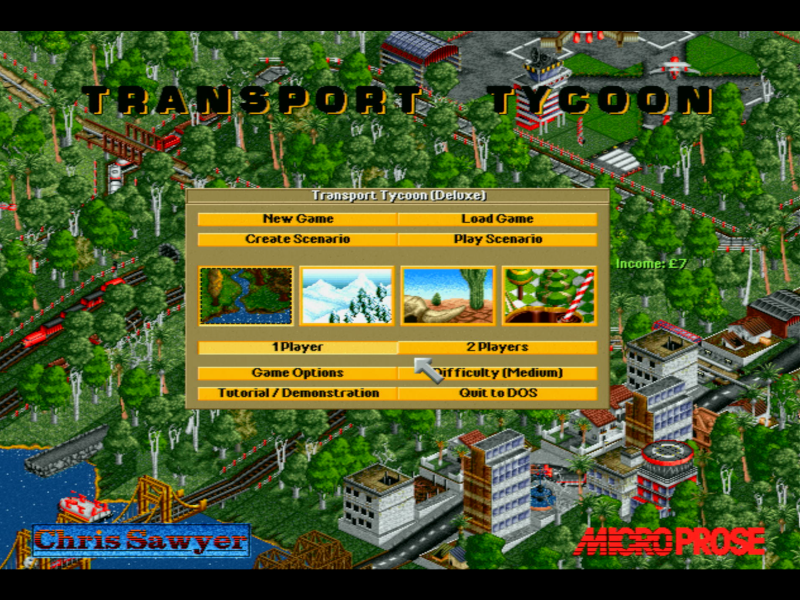
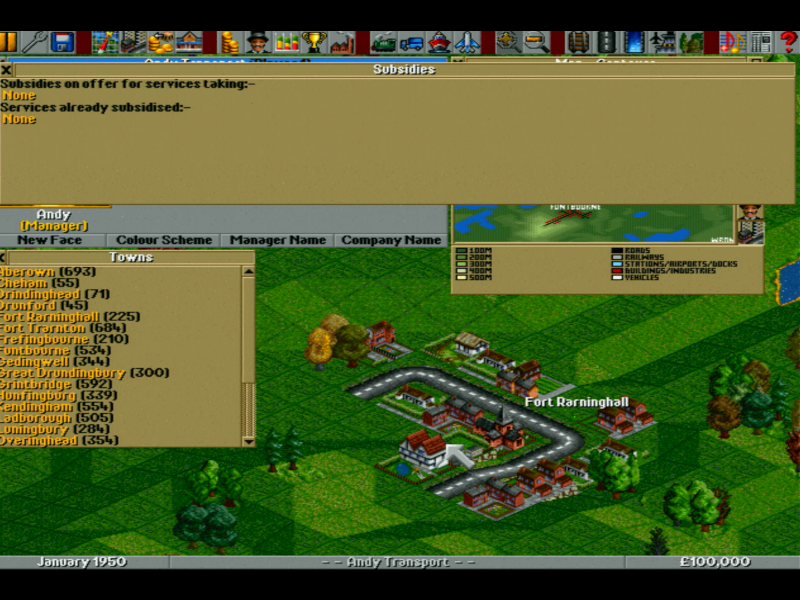
Transport Tycoon Deluxe, running in a full-screen DOS session on OS/2 2.11
I also tried out NHL Hockey from EA Sports with Sound Blaster configured for audio. The game ran just fine and the music worked great but I was unable to hear the digitised speech:
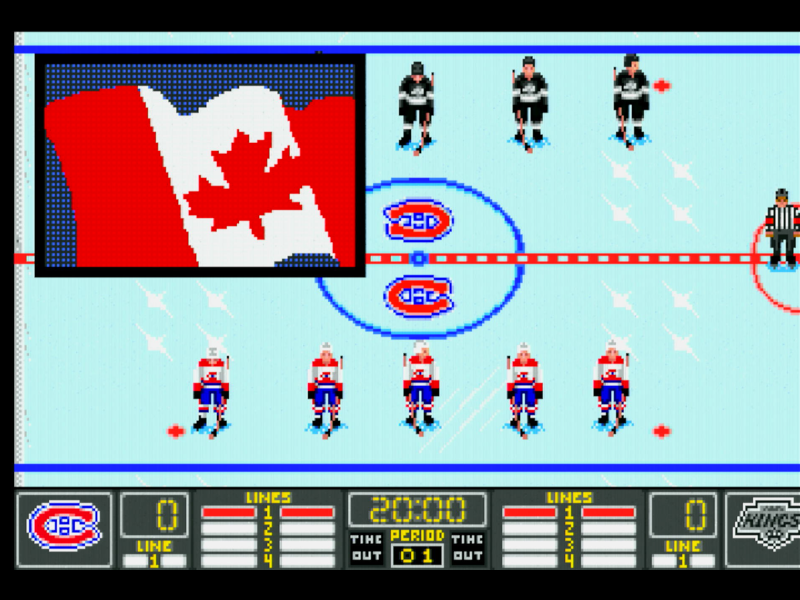
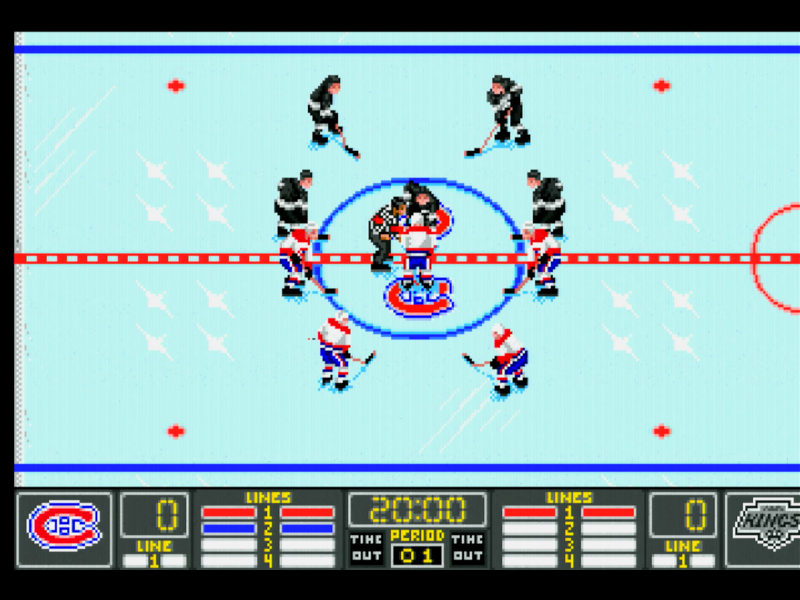
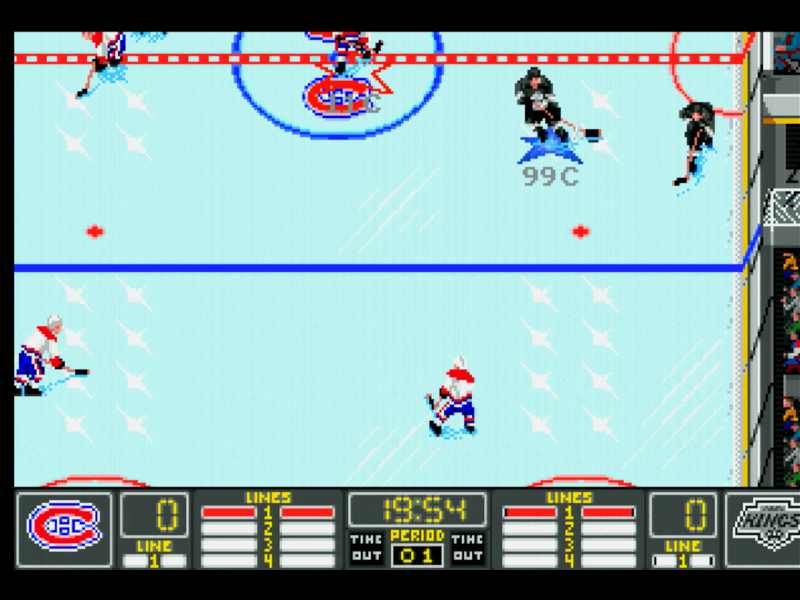
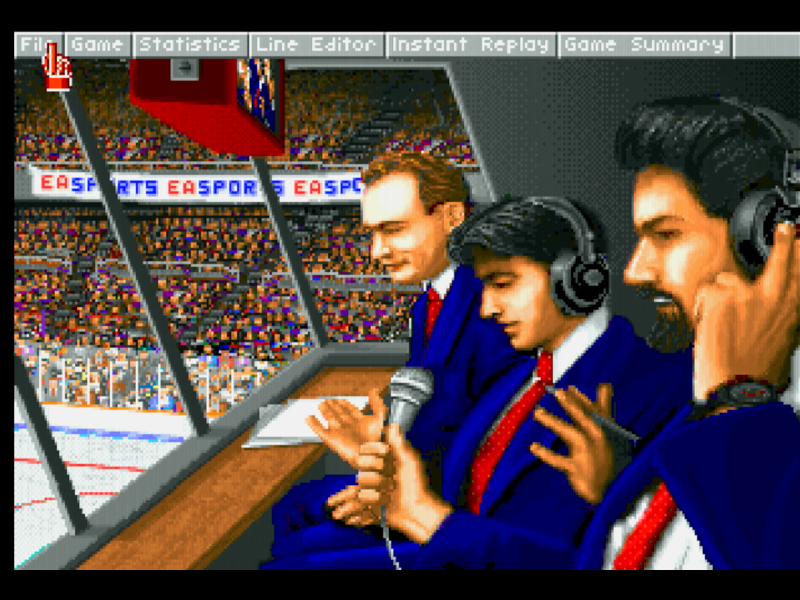
These tests are of course by no means exhaustive; just a quick test of broad compatibility in various modes. When I get the chance, I will put in a more capable graphics card, install the OS/2 drivers and see what higher colours depths and resolutions looks like.
Whenever I've found device drivers for Windows I've made sure to also grab the OS/2 ones also, so you should be able to find OS/2 drivers right here on DOS Days for the more popular cards including:
- ATI mach64, Rage, Rage II, 3DRage, VGA Wonder, Graphics Vantage/Ultra
- Cirrus Logic CL-GD5402, CL-GD5426
- Diamond SpeedSTAR 64, SpeedStar 24X, Stealth VRAM, Stealth SE, Stealth 32, Stealth 3D/2000
- Number Nine GXE, GXE64, GXE64 Pro, Trio, Vision 330, Imagine 128, Imagine 128 Series 2, Motion 331, Motion 531, Motion 731
- Matrox Millennium, Mystique, G100, G200, G400
- nVidia RiVA TNT
- S3 Vision864, Trio32/64, Trio64V+, Trio64V2, ViRGE, ViRGE DX/GX/GX2/VX, Savage 2000
- Tseng Labs ET4000 cards
- Video Seven VRAM II Ergo
- Western Digital WD90C30, WD90C33
I also have manufacturer audio drivers for:
- Aztech Sound Galaxy Nova 16, Pro 16 II, Orion 16
- Genoa AudioBlitz 3D
- Gravis UltraSound
- Terratec Maestro 16/96, 32/96, EWS64
Conclusion
On the whole I've been really impressed with OS/2. Its stability was rock solid throughout. I've not tested it long-term but have read from numerous sources you can leave an OS/2 operating system running for years without it needing a reboot (can you say the same thing about Windows?).
I did once have an issue with some cross-linked files when I didn't properly use the 'Shutdown' option (and recall with hindsight that this is something you must do with OS/2!), but it automatically ran its version of CHKDSK on next reboot and recovered just fine.
I imagine most of us would jump straight to OS/2 Warp (effectively OS/2 3 and 4) if seeking an alternative to Windows 3.x or 95, but given its better architecture and full capability to run Windows applications, I don't see why OS/2 v2.x should be overlooked. The only potential reason would be if you cannot find OS/2 drivers for some of your hardware.
I hope you enjoyed this brief tour of IBM OS/2 v2.11 ! Let me know if you've used OS/2 before and what you thought of it by using the Contact Us link below!